Moissanite vs Diamond: The Honest Comparison

Moissanite has gone from obscure lab gem to the most popular diamond alternative on the planet, and for one simple reason: it looks spectacular for a fraction of the price. But it isn't a diamond, and pretending otherwise is how people end up disappointed. Here's the honest comparison — the real differences, who each one suits, and how to buy whichever you choose without overpaying.
What moissanite actually is
Moissanite is a lab-created gemstone (silicon carbide), originally discovered in a meteorite crater. It is not a "fake diamond" or a cubic zirconia — it's its own mineral, and a very hard, durable one. Nearly all moissanite sold today is grown in a lab, which is exactly why a stone the size of a one-carat diamond costs a tenth (or less) of the diamond price. A moissanite engagement ring gives you a big, brilliant look for a budget that would barely buy a diamond chip.
How they differ in the hand
On hardness, diamond wins (it's the hardest natural material), but moissanite is close behind and tough enough for daily wear in a ring — it won't scratch or cloud. On sparkle, moissanite actually out-performs diamond: it has higher refractive brilliance and throws more rainbow "fire." Some people love that extra flash; others find it reads as slightly less "white," especially in larger stones under bright light. Side by side, a trained eye can tell them apart; across a room, almost nobody can.
Price is the whole point
This is where moissanite is unbeatable. A two-carat moissanite stone can cost less than a quarter-carat natural diamond. That gap is the real decision: do you want the diamond name and resale story, or do you want the maximum size and sparkle for your money? Neither answer is wrong — but be honest with yourself about which actually matters to you, because you're paying a large premium for the word "diamond."

Who should choose which
Choose a diamond (natural or lab-grown) if the tradition, the name, or long-term resale matters to you, or if you simply want the hardest stone. Choose moissanite if you want the biggest, most brilliant stone your budget allows and you don't care about the diamond label. Many couples buy a moissanite center stone and put the savings toward the wedding, a honeymoon, or a house — a genuinely sensible move. Pair it with a quality ring setting and most people will never question it.
Buying moissanite without overpaying
Because moissanite is lab-made and abundant, you should never pay diamond-like prices for it. Buy from a seller who states the stone's size in millimeters (not just "diamond-equivalent carat"), confirms it's moissanite in writing, and offers a warranty against clouding or chipping (reputable brands offer lifetime ones). A jewelry cleaning kit keeps the sparkle up, since skin oils dull any stone over time. Avoid sellers who blur the line between moissanite and diamond — transparency is the mark of an honest one.
What I'd skip
Skip any seller who calls moissanite a "diamond" or hides what it is. Skip paying a premium for moissanite — its whole appeal is the low price. Skip stressing about the tiny color difference in smaller stones; it's invisible in normal wear. And skip the idea that choosing moissanite is "settling" — it's a smart, beautiful choice millions are happily making.
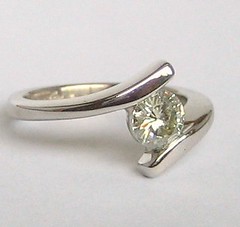
The honest answer
If you want a diamond for its own sake, buy a diamond — and consider lab-grown to stretch the budget. If you want maximum sparkle and size for the money and don't care about the label, moissanite is the clear winner and there's nothing second-rate about it. Decide which of those two things you actually care about, and the choice makes itself.
Ready to shop? Compare moissanite engagement ring across stores →