Paintball Assault Tactics: How Suppress-and-Invade Wins Flags

The first time my team pulled off a clean suppress-and-invade, the other side never figured out how we got the flag — and that's exactly the point.
Most new paintball teams attack as a mob: everyone rushes, everyone shoots, everyone bunches up and gets mowed down. The teams that actually take objectives split into two roles that work together — one to suppress, one to invade. It's the single most reliable assault structure I've used, and it isn't complicated once you understand each job.
The role of suppression
Suppression isn't about eliminating anyone. It's about distraction — keeping the enemy's heads down and their attention locked on you so they never notice the second group moving. The goal is to make the other team puzzled and reactive while your real attack develops somewhere they aren't looking.
A suppression group works best at three or more players. Their fire needs to be accurate enough to keep opponents pinned, but here's the subtle part: don't fire in unison. Staggered, irregular fire from several positions leaves the enemy unsure how many of you there are or where the pressure is really coming from. That confusion is the whole product. Control and concentration matter more than volume — wasting your hopper in the first thirty seconds defeats the purpose.
The role of invasion
While suppression makes noise, the invasion group makes none. These players have the hardest job: stay hidden, hold fire, and move into position to capture the flag while the enemy is fixated on the suppressors. It takes patience and real discipline not to fire early — one careless shot from the invasion side blows the whole plan and tells the enemy where the real threat is.
The invasion group's payoff is a position the enemy doesn't know exists. When they finally commit, they commit hard. The aim is to do severe, decisive damage all at once — not pick off one surprised player, but break the enemy's defensive line before they can swing around to face the new direction.

Timing is everything
The two roles live or die on timing. Suppression has to be loud and convincing before the invasion moves, and the invasion has to be in position before it reveals itself. We use simple hand signals and pre-agreed cues so the invasion group knows the enemy is pinned and it's time to push.
Get the timing wrong and you have two weak half-attacks instead of one strong one. Get it right and the enemy is fighting in the wrong direction when your flag-runner breaks for the objective.
Commit fully when you strike
Paintball markers are loud, so the moment the invasion group opens up, the secret is out. There's no easing into it. Once you start, every shot has to count and the pressure has to be overwhelming, because the enemy now knows exactly where you are and will counterattack if you give them room. The wall of paint you put down in those first few seconds is what decides whether the assault lands.
This is why we drill it in practice with fresh paintballs and a clear plan — the move only works when both groups trust their roles and don't improvise mid-push.
Reading when to launch the assault
The hardest part to teach is timing the trigger. Launch the invasion too early and the enemy isn't truly pinned, so they swing around and chew up your invaders. Launch too late and the suppression group runs dry or the enemy gets curious and starts repositioning. The window is real but narrow, and reading it is what separates a team that drills this from one that just talks about it.
The cues we watch for: the enemy has committed their fire toward the suppressors and stopped scanning sideways, their movement has gone static, and our invasion group signals it's in position. When all three line up, the flank-runner gets the go. If even one is missing, we hold — a held assault that launches clean beats a rushed one that launches into an alert defense. Patience on the trigger is as important here as it is in a sneak attack.
Common ways the assault falls apart
Most failed suppress-and-invade attempts die the same few ways. The suppression group fires in unison, so the enemy reads it as one position and isn't confused at all. Or the invasion group gets impatient and pops a shot early, revealing the real threat before it's in position. Or nobody agreed on the signal, so the two halves launch on different beats and you get two weak attacks instead of one strong one.
All of those are practice problems, not game-day problems. Drill the staggered fire until it's irregular by habit, drill the invasion group's discipline until holding fire is automatic, and lock in your signals before you ever step on the field. Fix it in practice and the assault lands on game day.
What you need to run it
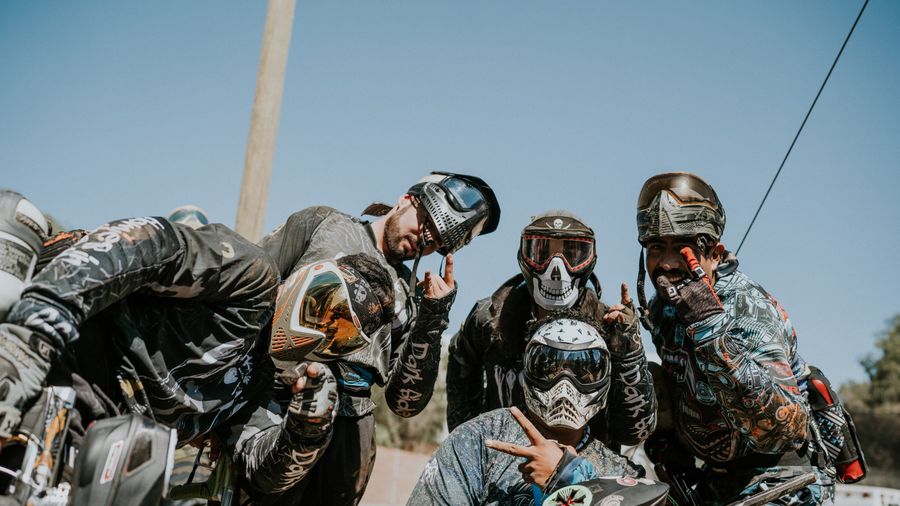
You don't need elite kit, just reliable paintball gear and a marker you trust. The suppression group benefits from a paintball gun that feeds smoothly under sustained fire and a deep stock of paint to keep the pressure on; the invasion group benefits from accuracy and quiet movement. Restock from any of the usual paintball stores before a tournament so nobody shows up short. Sort your paintball supplies so nobody runs dry at the wrong moment, make sure every player has a fog-free paintball mask so nobody's blind at the push, agree on signals, and practice the handoff until it's automatic.
Suppress to fix their attention, invade where they aren't looking, and strike all at once. Run that cleanly and you'll take flags off teams that out-shoot you on paper every single time.
Ready to shop? Compare paintball gear across stores →