How to Retreat in Paintball: The Art of the Fighting Withdrawal

Retreating gets a bad name in paintball, but the truth is that a clean fighting withdrawal has saved more of my games than any heroic last stand ever did.
There is a difference between running away and retreating, and learning it is one of the quiet marks of an experienced player. Running away is panic. Retreating is a deliberate maneuver to save your team's strength for a better position. When you are pinned, outgunned, or simply caught in a losing pocket, knowing how to pull back as a unit is what keeps your squad in the match. Done right, a retreat is an offensive tool in disguise.
Always Have a Plan B
The biggest mistake players make is deciding to retreat after they already need to. By then it is too late, and the pullback becomes a rout. The fix is to choose your fallback position before you ever need it. Every time your squad moves up, identify where you would go if it all went wrong, and make sure it is safer than where you are now.
Good fallback spots share two traits: they offer real cover, and they sit closer to the rest of your team's units so you can link up. Critically, every single player has to know where that spot is and how to get there. A retreat plan that lives only in the leader's head is no plan at all. Brief it, point at it, make sure everyone can find it under pressure with paint flying. The right paintball gear that lets you move fast and low is part of that preparation.
Fight Together, Run Together
When the call to retreat comes, you go as one. All for one and one for all is not a slogan here, it is survival. A team that scatters in five directions cannot watch each other's backs, cannot cover, and gets eliminated one isolated player at a time. The enemy loves nothing more than a panicked team breaking apart.
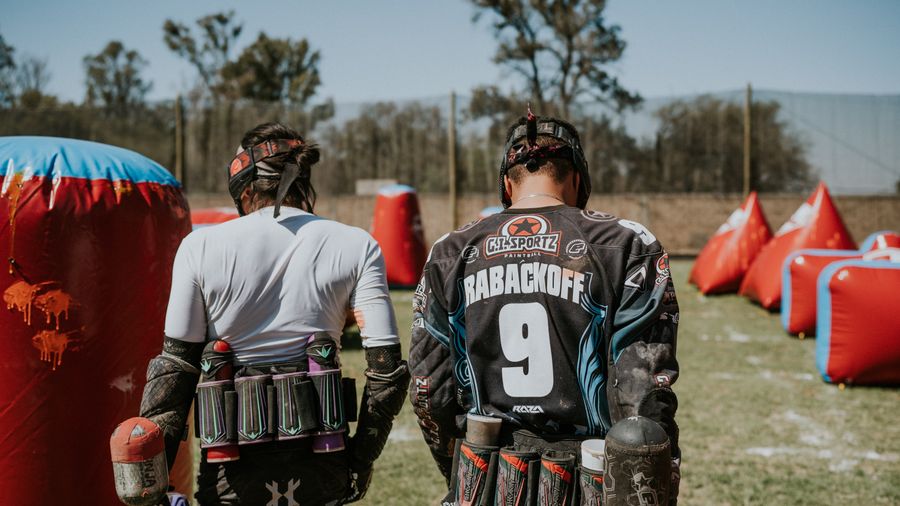
Move as a single group and your combined firepower stays a genuine threat the whole way back. Picture the alternative: everyone bolting to separate corners, each player alone, unable to support the others. That is not a retreat, that is the enemy's dream. Keep formation, keep your spacing tight enough to support but loose enough to not bunch into one easy target, and pull back together. A reliable paintball marker in every hand keeps that wall of cover intact.
Fire, Fire, Fire, and Then Move
The single most effective way to break contact is to overwhelm the enemy with paint right before you move. When your leader calls the retreat, the whole squad opens up, hammering everything that moves for about three seconds. That volume forces the opposing team to duck for cover instead of chasing you, and those three seconds buy the gap you need to fall back.
Then you move, but you do not stop shooting. Keep glancing back, keep putting paint on anyone firing at you, and do it as a coordinated group rather than as individuals taking turns to panic. A retreat is not an excuse to duck and cover and hope. It is a fast, deliberate repositioning, and speed is everything. Drag it out and you hand the enemy time to flank you. Make sure your paintball supplies include enough paint for these covering bursts, because a dry hopper mid-retreat is a disaster.
The Exception: When You Don't Fire Back
There is one situation where you break the fire-while-retreating rule, and it matters. If your squad is pulling back specifically to reinforce or rescue teammates somewhere else on the field, you may not want to waste paint or time engaging. In that case, raw speed beats covering fire. You move as a unit, fast and silent, and save your paintball supplies for where they are actually needed.

Even then, the principle of moving as one group holds. The exception changes whether you shoot, not whether you stay together. Coordination is the constant in every retreat scenario.
Retreating to Win
None of this is easy in the moment. Adrenaline screams at you to either freeze or sprint, and resisting both takes discipline. But a well-executed withdrawal can be the single best decision available to a team on the back foot. You trade ground you could not hold for a position you can, and you keep your players in the game instead of feeding them to the enemy one at a time.
Plan your fallback, move together, cover your retreat with a wall of paint, and know when silence and speed beat shooting. Master that and retreating stops being a defeat and becomes a setup for your next push. Equip your squad with dependable paintball equipment and a solid paintball gun, drill the withdrawal until it is muscle memory, and you will live to win the games that less disciplined teams throw away.
Ready to shop? Compare paintball gear across stores →