The Mechanics of a Habit That Actually Sticks

For most of my twenties I believed habits were a character trait. Some people had the discipline gene and some people did not, and I was clearly in the second group. Then I learned that habits are not a personality. They are a machine with three moving parts, and once I could see the parts, I could finally start fixing the machine.
The parts are simple: a cue that triggers the behaviour, the behaviour itself, and a reward that tells your brain to do it again. Every habit you have, good or bad, runs this exact loop. Brushing your teeth, checking your phone, the cigarette after lunch. The loop does not care whether the habit helps you. It only cares whether the loop is complete. Understanding that one thing did more for my behaviour than a decade of trying to "be more disciplined."
Find the cue, because the cue is doing the work
Behaviours do not start themselves. Something sets them off, and that something is almost always one of a few categories: a time, a place, an emotional state, the people around you, or the action that came just before. When I wanted to stop reaching for my phone every spare second, the breakthrough was noticing the cue. It was not boredom. It was the specific feeling of putting something down and having empty hands.
You cannot change a habit you cannot see, and the cue is the part hiding in plain sight. For a week, every time you do the thing you want to change, note where you were and what happened right before. The pattern shows up fast. I logged mine in a small pocket notebook I carried everywhere, and the trigger became obvious within days.
Make the good behaviour stupidly easy to start
Once you know the cue, you can attach a better behaviour to it, but only if that behaviour is easy enough to do on a bad day. This is where most people sabotage themselves. They decide the new habit is a full hour at the gym, and the friction of getting there kills it inside two weeks.

The trick is to shrink the starting action until it is almost impossible to skip. Not "work out," but "put on the shoes." Not "meditate for twenty minutes," but "sit down and take one breath." The small version sounds pointless, but it gets you across the hardest part, which is starting. Nine times out of ten, once the shoes are on, I go. I keep my resistance bands sitting on the desk where I cannot avoid seeing them, because a habit you trip over is a habit you keep.
Reward yourself before the payoff is real
Here is the part people get wrong. The long-term reward, the fitness or the savings or the skill, is too far away to drive daily behaviour. Your brain wants something now. So in the early weeks you have to manufacture an immediate reward, or the loop never closes and the habit never sets.
It can be small. A tick in a habit tracker journal, a genuinely good coffee after the morning session, two minutes of a song you love. The point is that your brain needs to feel something good attached to the behaviour while it is still new and fragile. Once the habit is established, the behaviour becomes its own reward, but you have to bridge the gap until you get there. That visible row of ticks is doing real chemical work, not just decoration.
Stack the new habit onto an old one
The easiest cue to use is a habit you already have, because it already fires reliably every day. I never miss my morning coffee, so I attached my vitamins to it. The coffee finishes, the pills go in. I do not have to remember, because the coffee remembers for me.
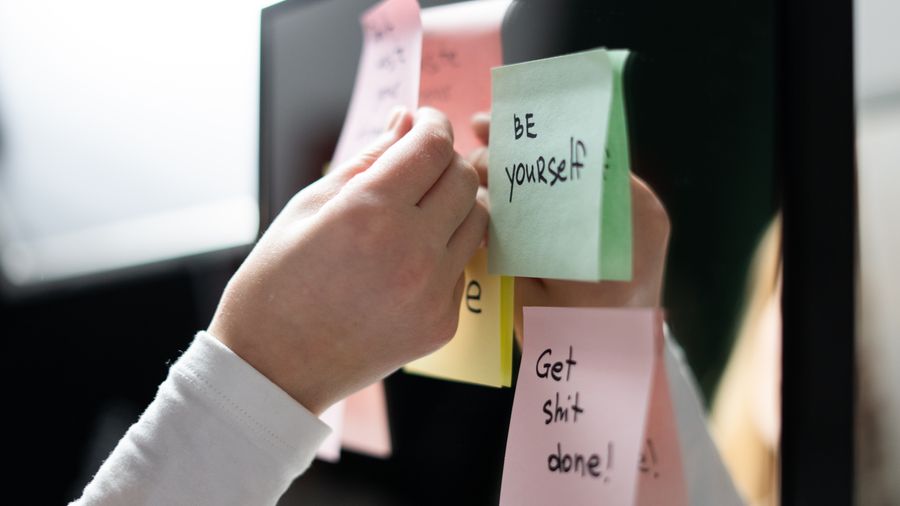
This is the single highest-return technique I know. Look at the things you already do without fail, then bolt the new behaviour directly onto the end of one of them. After I brush my teeth, I floss one tooth. After I sit at my desk, I write one sentence. The existing habit becomes the alarm clock for the new one, and you skip the hardest problem in habit-building, which is remembering to start.
Expect to miss, and refuse to spiral
You will break the chain. Everyone does. The difference between people who keep their habits and people who lose them is not perfection, it is recovery speed. One miss is nothing. The damage comes from the story you tell after the miss, the "I've blown it, may as well quit" spiral that turns one bad day into a dead habit.
My only rule is to never miss twice. Miss Monday, fine, but Tuesday is non-negotiable. I have read enough self improvement books to know this is the whole game. The habit is not the streak. The habit is the return. Get good at coming back the next day and you become, functionally, the disciplined person you assumed you would never be. Not because you grew a new trait, but because you finally built the machine correctly.
Ready to shop? Compare habit tracker journal across stores → 📚 Or browse self-help courses & ebooks in Digital Goods →