Where to Actually Find Good After-School Activities

When I first went looking for after-school activities, I assumed the school would hand me a tidy menu and I'd just pick one. The school handed me a single flyer for a chess club that met on the one afternoon we already had a commitment. So began my education in actually hunting these things down.
The good news is that options are almost always out there — they're just scattered across a dozen sources that don't talk to each other. Nothing beats the power of information, so the real skill is knowing where to dig. Here's the map I wish someone had handed me.
Start with the school, but don't stop there
The school is the obvious first stop. Ask the office directly what after-school activities they run, and get the full list — not just whatever flyer happens to be by the door. Sometimes there's more than they advertise; a clubs sheet lives in a binder nobody mentions unless you ask.
But plenty of schools offer little or nothing, and that's fine — it just means you widen the net. Don't treat the school's list as the boundary of what's possible. It's the first source, not the only one.
Ask the neighbors — seriously
This is the source people skip, and it's often the best. Other parents on your street and in your kid's class are a living database of what's good, what's a waste of money, and which instructor is worth driving across town for. When the school comes up short, I knock on doors — figuratively, in a group chat, or literally.
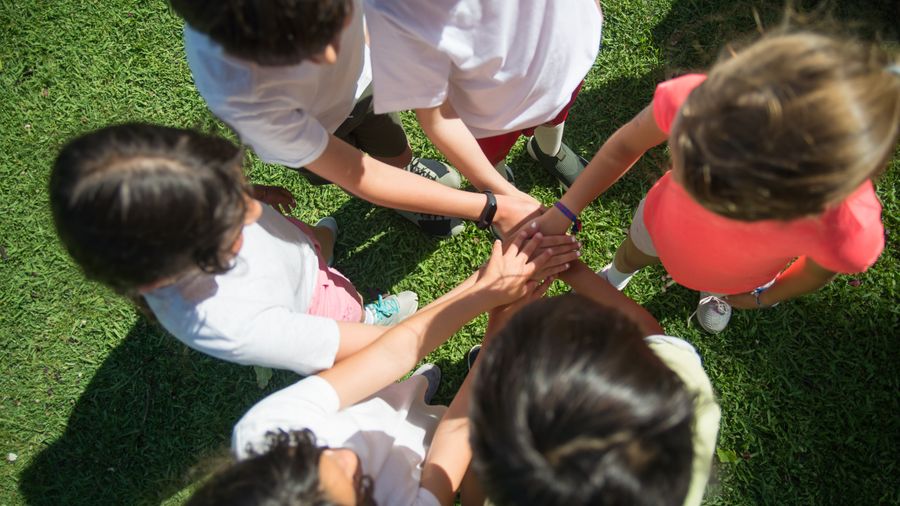
Neighbors tell you the things no brochure will: that the timings actually work for working parents, that the coach is patient with shy kids, that the "premium" program is mostly marketing. Word of mouth filters quality in a way no website can. A parent whose kid just outgrew a kids art and craft set phase can tell you exactly which class made it stick.
I've learned to ask the slightly awkward follow-up too: not just "is it good?" but "would you sign up again?" Plenty of programs are fine and forgettable. The ones worth your afternoons are the ones another parent would re-enroll in without hesitating. That single question cuts through a lot of polite enthusiasm and gets you to the real verdict fast.
Mine the community resources
Beyond schools and neighbors sits a whole layer of community institutions built for exactly this. Community centers. Places of worship. Local libraries, which run far more for kids than book time. Museums with after-school programs. The YMCA. The Boys and Girls Club. These run quality programming, often at a fraction of private-class prices, and they're easy to overlook because they don't advertise like businesses do.
I make a quick loop through these whenever I'm hunting. A library robotics club or a museum art workshop can rival anything commercial, and the community-center sports leagues are frequently better value than the slick private academies. Pair one with the right STEM kits for kids or kids science kits at home and you've got a real pursuit going for very little money.
Loop your kid into the decision
Once I've gathered the options, I sit down and go through them with my child. The fastest way to find what fits is simply to ask what they're drawn to. Their interest is the strongest predictor of whether they'll stick with something, so I weight it heavily.

With very young kids you can't fully rely on their say-so — they'll enthusiastically agree to anything and change their mind by Tuesday. For the little ones, I watch their development over time instead, and treat excessive resistance to an activity as a real signal that it's worth looking elsewhere. A toddler who lights up over educational toys for toddlers is telling you something, even if they can't articulate a preference yet.
Be honest about your own schedule
The last filter is the one parents wish they could ignore: your family's logistics. The best activity in the world is useless if you can't actually get your kid there. So before I fall in love with an option, I check it against our real week — the drop-offs, the dinners, the other kid's commitments.
If the chauffeuring genuinely doesn't work, I don't force it; I get creative. Sometimes that means hiring a tutor to come to the house, or running an activity at home altogether. A home setup with a kids keyboard piano or a stack of beginner craft supplies can deliver a real pursuit on a schedule that actually fits your life — no carpool required. The point isn't to find the fanciest program. It's to find the right one that your family can sustainably support.
Ready to shop? Compare kids art and craft set across stores → 📚 Or browse relationship & dating guides in Digital Goods →