

What Small Low-Shedding Dogs Actually Need From You

Small low-shedding dogs get described as low-maintenance, which is true in one specific way — they don't cover your house in fur. In most other ways they require active daily care, and their size makes the consequences of neglecting that care more acute than with larger, more independent breeds. Here's what life with a small hypoallergenic dog actually involves.
Social needs: these dogs want to be with you
Most small low-shedding breeds — Maltese, Havanese, Bichon Frise, Toy Poodle — were developed specifically as companion dogs. That's not a casual description. They were bred for centuries to live close to people, and the instinct runs deep. A dog like this left alone for nine or ten hours on a regular workday will often develop anxiety behaviors: barking, destructive chewing, inappropriate elimination, refusal to eat. It's not spite; it's a dog experiencing actual distress.
This doesn't mean you can't own one if you work. It means you need a plan — dog walker midday, doggy daycare a few days a week, or working from home some of the time. A interactive dog toys for small breeds dispenser can occupy a dog for stretches of time, but it's not a substitute for human presence. Be honest with yourself about how much time the dog will actually spend alone before you choose this type of breed.
Exercise: less than a Lab, still real
Small dogs can't do a ten-mile hike, but they're not couch ornaments either. Two walks a day — one of 15 to 20 minutes, one somewhat longer — plus active indoor play covers the basics. A dog that doesn't get enough movement becomes restless and finds its own activity, usually involving things you'd prefer stayed intact. puzzle toys for small dogs that make them work for food are a legitimate exercise substitute on days when getting outside isn't possible.

Cold weather matters for many small breeds. Single-coated or hairless varieties need outdoor time limited on very cold days, and a proper dog coat for small breed makes walks more comfortable and longer — which benefits both the dog and you.
Grooming: the consistent requirement
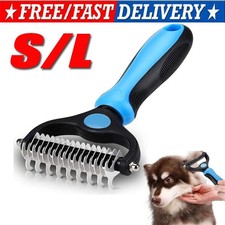
Low-shedding doesn't mean no coat care. Most small hypoallergenic breeds grow coat continuously, which means it mats without regular attention. A daily pass with a small dog slicker brush takes five minutes and prevents the tangled mess that turns into a painful session — or a full shave-down at the groomer because mats have pulled too close to the skin to save the coat. Professional grooming every six to eight weeks is standard for most of these breeds. Budget for it.
Food: quality matters, quantity is easy to get wrong
Small dogs have higher metabolic rates per pound than large dogs and need calorie-dense food appropriate to their size. Many owners overfeed because the portions look tiny. An overweight small dog develops joint problems, respiratory issues, and shortened lifespan faster than a large breed at the same proportional overweight. Feed by weight guidelines from the food, adjust for actual activity level, and don't supplement with table food beyond minimal amounts.

What I'd skip
I'd skip the assumption that small equals easy. Small means the grooming, feeding, and social requirements are scaled down in volume but not in frequency or importance. A small dog that doesn't get enough companionship and structure is not a happier or easier dog than a large one — it's a small one behaving badly, which in some ways is harder to manage because the root cause is less obvious to observers. Invest the time. These dogs return it with genuine loyalty.
Ready to shop? Compare Pets across stores →