What Feeding My Dog Actually Costs, and Where I Save
Nobody warns you that the food bill is the part of dog ownership that never stops. The crate is a one-time buy. Dinner happens twice a day, every day, for years, and the numbers add up faster than you'd think.
I'm a regular owner who got tired of feeling robbed at the pet store checkout, so I sat down and actually worked out where my dog-food money goes. This isn't vet nutrition advice. It's a budgeting reality check, and it might save you from the two mistakes I made: overpaying for marketing, and underpaying for quality and regretting it.
Cost is real, but it's not everything
Here's the honest tension. For most of us, the dog is family. We don't sit there with a calculator deciding whether companionship is worth the grocery bill, and plenty of owners happily spend more than is strictly necessary because the dog is worth it to them. I get that completely. The value a dog brings isn't measured in dollars per pound of kibble.
But "I love my dog" can quietly become "I'll pay whatever the bag costs," and that's where I started losing money for no benefit. The goal isn't to feed cheap. It's to stop overpaying for things that don't actually help the dog. Smart dog food shopping is about value, not just price.
Why the premium options cost what they do
Once I read up on it, the price differences started making sense. The expensive products tend to be the ones using more involved production methods: oven-baking, freeze-drying, careful canning, that sort of thing. You're partly paying for processing and packaging, not just ingredients. That's not automatically a rip-off, but it does mean a higher price tag isn't proof of better nutrition. Sometimes you're funding the factory more than the dog's bowl.

Knowing that helped me stop equating "most expensive" with "best." I started reading labels for what was actually in the bag instead of trusting the price to tell me. The same skepticism applies to fancy dog treats that cost a fortune for what amounts to flavored filler.
Wet costs more than dry, and there's a reason
One clear pattern: canned food generally costs more per serving than dry food. A big chunk of what's in a can is moisture, so you're paying to ship and store water. Dry food packs more nutrition into less weight, which is part of why it tends to be the more economical staple.
That doesn't mean canned food is a waste. Some dogs strongly prefer it, some need the extra moisture, and mixing a little wet into dry is a legitimate trick. But if budget is the priority, a quality dry food as the base makes the math far friendlier. I keep wet dog food as an occasional topper rather than the whole meal, and the savings are noticeable.
Where cheap genuinely backfires
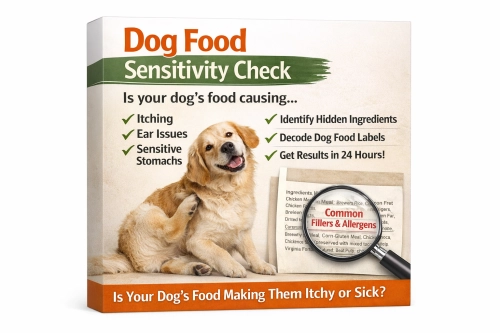
Here's where I'd warn against cutting too hard. The cheapest foods sometimes lean on ingredients that don't sit well with every dog, and food sensitivities are no fun and not free to deal with. If a bargain food upsets your dog's stomach or coat, any money you saved evaporates the moment you're troubleshooting the problem. I learned to watch how my dog actually did on a food, not just what it cost.
So my rule became: buy the best dry food I can comfortably afford, watch the dog closely when switching, and don't chase the absolute rock-bottom price if it means rolling the dice on quality. A storage dog food container keeps a larger, better-value bag fresh so I'm not forced into smaller, pricier ones.

Where I actually save
The savings that worked for me weren't about buying worse food. They were about buying smarter. Larger bags of a food I trust cost less per serving than small ones. Reasonable nutrition guidelines, the kind reputable sources publish, helped me understand what my dog truly needs so I stopped over-buying supplements and add-ons he didn't. And reading the label rather than the front-of-bag marketing kept me from paying for buzzwords.
Homemade is another lever some owners pull, though it takes real effort to get the balance right, and quality ingredients aren't always cheap either. If you go that route, the savings come from sourcing well, not from cutting nutritional corners. I keep a few dog food storage basics on hand for batch portions when I do cook.
The bottom line
Feeding a dog well is a long-term cost, and pretending otherwise just leads to sticker shock. But expensive doesn't mean good, cheap can mean trouble, and the sweet spot is a solid dry food bought in sensible quantities with your eyes on how the dog actually does. Spend where it counts, skip the marketing premium, and let your dog's health, not the price tag, tell you whether you got it right.
Ready to shop? Compare wet dog food across stores → 🏷️ Shop direct from our partner Nextrition Pet →