

Preventing Matted Coats in Low-Shed and Hypoallergenic Dogs

Nobody warned me that the very thing making my dog easy on my allergies — a coat that barely sheds — was also the thing that would mat into painful knots if I looked away for a fortnight. With an ordinary shedding dog, loose hair falls out and that's the end of it. With a hypoallergenic coat, the hair stays put and keeps growing, more like human hair than fur, which means it needs the same kind of upkeep human hair does. After one expensive lesson involving a mat I couldn't untangle, I worked out a routine that keeps the coat healthy without turning grooming into a chore. Here's what works.
Why these coats demand more, not less
It's a genuine paradox. People often choose a low-shed breed expecting an easy ride, and the opposite is true. Because the hair doesn't drop out, it accumulates against the skin and tangles into mats — and a tight mat isn't just untidy. It pulls on the skin, traps moisture and dirt underneath, and leads to rashes, sores, and infections. If you don't have the time for a consistent grooming routine, or the budget for three or four professional grooms a year, this is the honest moment to admit a low-shed breed might not be the right dog for you. Going in with eyes open beats discovering it after the coat has already matted to the skin.
The between-grooms brushing routine
Professional grooms handle the trims, but the day-to-day defense against matting is brushing, and it's quick once it's a habit. The single rule that changed everything for me: always brush in the direction the hair grows, never against it. Brushing against the grain is one of the fastest ways to create the very tangles you're trying to prevent. A few minutes is enough — this isn't a half-hour ordeal — and most dogs genuinely enjoy the feel of it, so it doubles as bonding time.
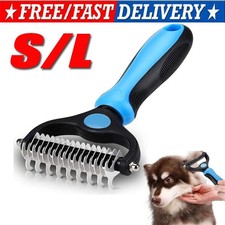
The tool matters. A good slicker brush suits most low-shed coats, and a dog grooming brush sized for your dog won't cost much. If you're not sure which style fits your dog's coat, ask your groomer — they'll point you to the right one in seconds. You can brush at almost any time as long as the dog is relaxed, but doing it on a loose schedule — say every couple of days — keeps you ahead of the tangles rather than fighting them.

When a mat has already formed
Sometimes you'll find a mat anyway — behind the ears and under the legs are the classic spots. A bath can help loosen a stubborn knot, so a gentle dog shampoo earns its place here, and a proper dematting tool is far kinder than yanking with a regular brush. Work slowly. The cardinal sin is pulling hard: it hurts, the dog stops trusting the whole process, and you've made the next grooming session a battle. If a mat simply won't come out, leave it for the groomer to cut out at the next visit rather than tearing at it. And if knots keep reappearing in the same places, that's a signal — brush more often, or have the coat clipped shorter to make upkeep easier.
Choosing a groomer you can trust
Even with diligent brushing, these coats need professional grooming every few weeks to couple of months. You'll find groomers online, in local listings, or at the big pet-store chains — the hard part isn't finding one but finding a good one. On the first visit, be specific about how much hair to take off. When you get the dog home, inspect the result: is the cut even, is the skin free of nicks, did they cut to what you asked? If the work is sloppy or the dog came back stressed, find someone else. If the dog was happy and the cut was right, you've found a keeper — and a good groomer will also handle the face trim and nail clipping while they're at it.
The case for learning to do it yourself
Plenty of owners handle grooming entirely at home once they're confident, and it pays for itself fast. A solid dog grooming kit with the right brushes, comb, and clippers covers the basics, and a quality pair of dog clippers lets you keep the coat short between — or instead of — professional visits. If your dog gets anxious or snappy when you try to groom, don't force it; that's exactly when a professional is worth the money. But for a calm dog, a little practice turns a recurring expense into a quiet, ten-minute routine you both end up enjoying.

Grooming as care, not chore
What reframed it for me was realizing that brushing and grooming aren't maintenance tasks I owed the dog — they're one of the clearest ways I show him I'm paying attention. A hypoallergenic dog gives you something rare: the ability to share your home with an animal you'd otherwise be allergic to. Keeping that low-shed coat healthy is the fair trade. Stay ahead of the mats, brush gently and with the grain, and the coat that helps your allergies stays comfortable for the dog too.
Ready to shop? Compare dog grooming brush across stores →