
How to Train a Boxer: Channeling the Energy, Intelligence, and Loyalty
The Boxer is one of the great family dogs — playful to the point of clownish, bursting with energy, and so loyal that once a Boxer decides you're its person, that bond is for life. But a Boxer is emphatically not a dog you can leave to raise itself. They're highly intelligent, which cuts both ways: it makes them quick to learn, and quick to figure out how to get their own way. Add their powerful build and serious-looking face, and an untrained Boxer becomes exactly the dog strangers wrongly fear. Trained well, it's the opposite — a gentle, devoted lap-seeking goofball. Here's how to get there.
Understand the breed you're working with
First, drop the myth: Boxers are not naturally aggressive. People assume it from their stature and guard-dog reputation, but Boxers are among the most playful dogs there are — they'd rather climb into your lap for a cuddle than menace anyone. Their traditional job is guarding, and they'll do it, but their default temperament is friendly and affectionate. The "aggression" people fear only appears in a Boxer that hasn't been properly trained and socialized. Your job is to channel a fundamentally good-natured, high-energy, clever dog — not to suppress a dangerous one.
Start early — from six weeks
Boxer training should begin young, from around six weeks old. At this age you're not drilling commands so much as laying foundations: socialize the puppy, play with it, and teach it in short, exciting bursts. Boxers respond to fun — make training a game and the clever brain that can frustrate you becomes your biggest asset. Keep sessions brief and upbeat, reward generously with training treats, and the early lessons stick. A young Boxer taught with energy and enthusiasm will actually look forward to training.
Socialization is the main event
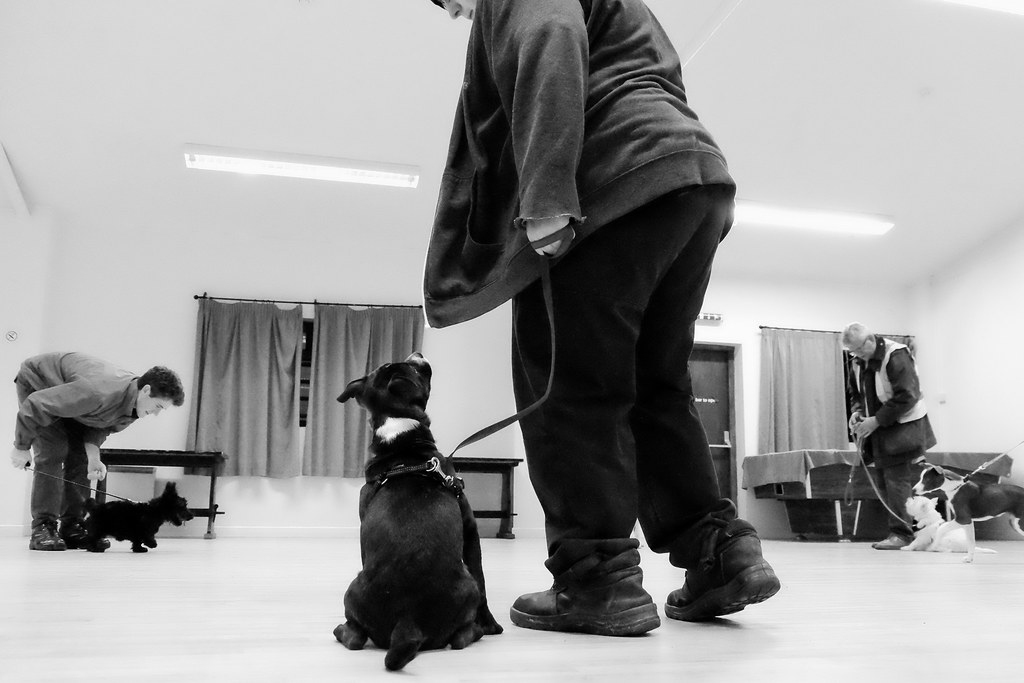
If there's one thing to prioritize with a Boxer, it's socialization. Boxers can be wonderfully friendly, but they become that way through deliberate exposure — getting comfortable around other dogs, strangers, children, and busy environments. The best route is a structured puppy training class, where your Boxer learns alongside other dogs and gets used to working amid distraction. A well-socialized Boxer is confident and gentle; an under-socialized one is reactive and harder to manage. Don't treat this as optional — it's the difference between the family dog the breed should be and a stressful handful.

The dominance stage: be a calm, firm leader
Expect a turning point around thirteen to sixteen weeks. This is when a Boxer tests boundaries — nipping, ignoring commands, and generally checking whether you really are in charge. It's normal adolescent behavior, but how you respond shapes the adult dog. Be a strong, calm leader: don't tolerate the pushy behavior, but don't meet it with anger or harshness either (which damages trust and rarely works on a smart, sensitive dog). Stay consistent, enforce the rules every time, and patiently make clear that nipping and defiance get nowhere. A dog clicker for precise, fair feedback and a steady routine carry you through this stage.
Patience with a stubborn genius
Here's the thing about training an intelligent dog: it will sometimes look you dead in the eye, fully understand the command, and decide it simply can't be bothered. That stubbornness is part of the package. The answer is never to escalate — it's patience and consistency. Ask again, calmly; reward compliance; never let defiance "win" by giving up. Because Boxers are smart, they learn fast once they accept that you're consistent — the same intelligence that makes them stubborn makes them excellent students when you've earned their cooperation.
Burn the energy
No training plan survives a Boxer with no outlet for its energy. These are athletic, playful dogs that need substantial daily exercise and play — without it, the smarts and the energy turn into destruction and mischief. Long walks, vigorous play, and a rotation of durable dog toys keep a Boxer physically satisfied and far more receptive to training. A tired Boxer is a trainable, well-behaved Boxer.
The three classic Boxer challenges — and the fixes
Most Boxer owners run into the same handful of behaviors, all of which come from the breed's exuberance rather than any meanness. Jumping up is the big one — Boxers greet people with their whole body. The fix is consistency from everyone: turn away and ignore the dog completely until all four feet are on the floor, then reward calm greetings; any family member or visitor who pets a jumping Boxer undoes the training. Mouthing and nipping, especially in adolescence, is play that needs redirecting — yelp or stop the game the instant teeth touch skin, and offer a durable chew toy as the acceptable target, so the dog learns hands are not for chewing. Pulling on the lead is predictable in such a strong, eager dog — stop walking the moment the lead goes tight so pulling never gets the dog where it wants to go, and a no-pull dog harness gives you control without choking a powerful chest. None of these are vices; they're an enthusiastic dog that hasn't yet learned the rules. Calm, repeated, consistent responses fix all three.

What I'd skip
Skip assuming a Boxer is aggressive — it's a trained-or-untrained issue, not a breed flaw. Skip harsh, punishment-based methods; they backfire on this sensitive, clever breed. Skip skimping on socialization, the single most important part. And don't skip the exercise — an under-exercised Boxer is an untrainable one.
The honest answer
Training a Boxer means working with a smart, energetic, deeply loyal dog that needs early, fun, consistent guidance to become the gentle family companion it's built to be. Start at six weeks, make socialization the priority, lead calmly and firmly through the adolescent testing stage, stay patient with the stubborn streak, and burn off that energy daily. Put the work in and a Boxer rewards you with one of the most devoted, joyful friendships a dog can offer.
Ready to shop? Compare puppy training class across stores →