

How Much and How Often Should You Feed Your Dog?

Ask ten dog owners how much to feed a dog and you'll get ten answers based on their own dogs. There's real science underneath the folklore, though, and getting portions and frequency right matters more than almost any other daily decision you make for your dog. Underfeed and they don't thrive; overfeed — by far the more common mistake — and you set up obesity, joint problems, and a shorter life. The good news is that a few clear principles, plus learning to read your own dog's body, get you there. Here's the practical guide.
Start with body weight — then adjust
Portion guidelines start from body weight, but they're a starting point, not gospel. A common rule of thumb: puppies eat roughly 5% of their body weight per day, while a dog on a raw diet might eat only 2–4%. The exact figure shifts with the dog's size, breed, and energy level. The bag of food gives feeding charts too — use them as a baseline. But the real measure is your dog: you should be able to feel (not see) the ribs easily, and a dog viewed from above should have a visible waist. If your dog is getting round, cut the portion; if it's getting thin, increase it. Adjust to the animal in front of you, not the number on a chart.
Puppies: small meals, often
Puppies have small stomachs and big energy demands, so they need restricted amounts fed frequently — typically three to four small meals a day for young puppies. A useful guide is to feed until the puppy's belly shows a moderate, comfortable fullness; keep going past that and you invite digestive upset and diarrhea, which is miserable for both of you. Don't separate or fully wean a puppy too early — generally not before eight weeks (orphaned puppies are a special case needing extra care). As the puppy grows, you gradually increase the amount per meal while reducing the number of meals.
Adult dogs: settle into a rhythm
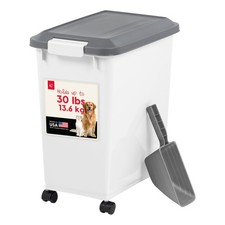
Most adult dogs do well on two meals a day — morning and evening — which keeps energy and blood sugar steady and is gentler on the stomach than one large meal. Feed measured portions at consistent times rather than free-feeding (leaving food down all day), which makes overeating easy and house-training harder to read. A simple dog food storage container with a measuring scoop keeps portions consistent, and an automatic dog feeder helps if your schedule is irregular. Adolescent and young adult dogs still burn more than older ones, so don't be surprised if a young dog eats more than your senior will later.

Senior dogs: less food, watch the protein
As dogs age and slow down, they burn fewer calories and generally need less food than they did as adults — continuing to feed adult portions to a less active senior is a fast route to weight gain. Reduce the amount to match their lower activity, and keep a closer eye on body condition since their metabolism changes. It's also wise to moderate protein levels in very old dogs (your vet will advise based on kidney and overall health). A senior dog food formulated for older dogs handles much of this balance for you.
Read the dog, not just the bag
The single most important habit is ongoing observation. Watch your dog's eating pattern and, more importantly, its body condition month to month. Obesity is the most common nutritional problem in dogs and a serious one — it takes years off their life and strains their joints. A dog that's gaining needs less; one that's losing needs more or a vet check. Weigh your dog periodically, run your hands over the ribs and waist, and treat the feeding chart as a draft you keep editing. A dog weight scale makes tracking easy for smaller dogs.
Treats count — the 10% rule
Here's the portion factor owners most often forget: treats. Training treats, dental chews, the corner of toast slipped under the table — they all add calories that rarely get counted against the daily total. The widely-used guideline is that treats should make up no more than 10% of a dog's daily calories, with the other 90% coming from balanced meals. Go past that and two things happen: the diet falls out of nutritional balance, and the calories quietly pile on. If you train a lot, account for it — reduce the meal slightly on heavy-training days, or use part of the dog's measured kibble as the reward instead of extra treats. Watch out for table scraps especially; beyond the calories, they encourage begging and can include foods that are bad (or toxic) for dogs. A few other things shift the math: spayed and neutered dogs need somewhat fewer calories, very cold weather can increase a working outdoor dog's needs, and a couch-bound dog needs less than the bag's "active dog" column suggests. Always factor in everything that goes in the mouth, not just what's in the bowl.

What I'd skip
Skip free-feeding (food down all day) — it's the easiest path to obesity. Skip feeding a senior the same amount it ate as a young adult. Skip overfeeding puppies to "fullness and beyond" — moderate belly fullness is the target, not a stuffed one. And skip trusting the chart over your own eyes and hands; the dog's body condition is the real guide.
The honest answer
Feed by life stage and adjust by body condition: puppies get small, frequent meals; adults settle into measured portions twice a day; seniors eat less as they slow down. Start from the body-weight guidelines, then read your actual dog — ribs easy to feel, visible waist — and tune the amount up or down. Get this right and you sidestep the single most common, most damaging mistake in dog care: quietly overfeeding a dog into ill health.
Ready to shop? Compare dog food storage container across stores → 🏷️ Shop direct from our partner Nextrition Pet →