Paintball Mask Fit and Comfort: What Changes After the First Hour

The initial fit test — mask on, strap adjusted, nod a few times — tells you surprisingly little about how a mask performs over a real session. The problem areas only emerge after you've been wearing it for 45 minutes while moving hard, sweating, and crouching behind cover repeatedly. Here's how to evaluate a paintball mask for the game you'll actually play, not the store visit where you'll try it on.
Why the first twenty minutes lie to you
Fresh foam compresses evenly and the strap is adjusted when you're standing still and relaxed. That's not how you wear a mask during play. You're running, ducking, looking hard left and right, and the mask has to stay sealed and comfortable through all of it. The spots where masks actually fail over a long session are almost always the same: the nose bridge digs in after an hour, the foam on the cheekbones gets sweaty and shifts, the lower chin area traps heat badly enough that you want to lift the mask off your face — which you should never do on a field.
A proper evaluation involves wearing the paintball mask for at least 20–30 minutes of active movement before committing, not just standing in front of a mirror. If you're buying online without trying it first, read reviews that specifically mention extended comfort rather than initial impressions.
Foam type: open cell vs. neoprene and what it means for a long day
Most budget masks use neoprene foam — it's durable, easy to clean, and holds its shape under repeated hits. The problem is that neoprene presses back against your face rather than conforming to it. Over an hour of wearing it, the pressure points at the forehead and cheekbones become noticeable, and for players with narrower faces it can feel like the mask is actively squeezing inward.
Open-cell foam, which appears on mid-range and premium masks, behaves more like memory foam. It molds to the contours of your face with wear heat and distributes pressure more evenly. The difference is genuinely felt over a full day of play rather than a single game. Open-cell foam also ventilates slightly better, which helps with the heat buildup that makes players lift their mask in the first place. If you're between two masks at different price points and the more expensive one has open-cell foam, that's usually the right upgrade to make.
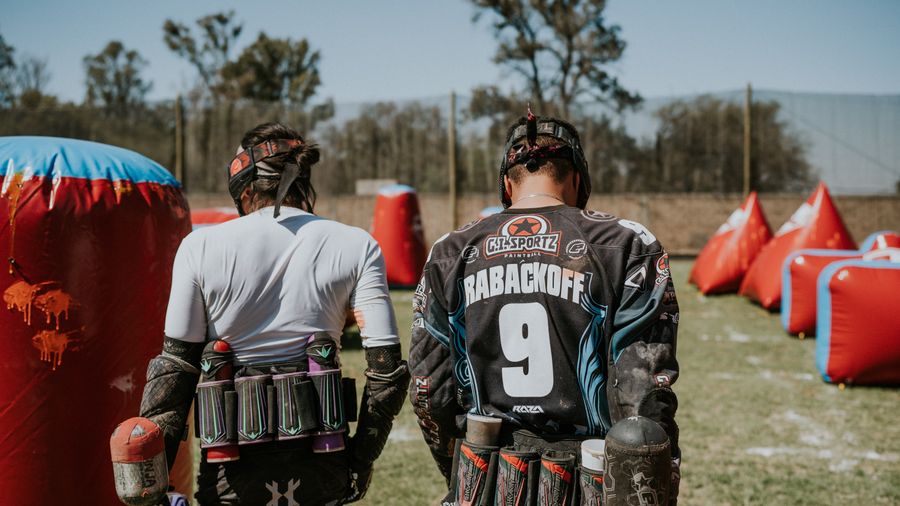
Strap adjustment and the slipping problem
A mask that slips during play is dangerous and distracting. The strap should grip the back of the head securely without over-tightening — overtight means headache territory within an hour. The adjustment range matters: narrow straps with limited adjustment work fine for average head sizes but leave players at the extremes either cranking the strap too tight or living with a mask that shifts.
Check whether the strap threading is replaceable. After heavy use, the clip-and-slot adjustment system on many budget masks loosens and stops holding the set length reliably. On better masks, replacement straps are available and cheap. On lower-end models, a strap that won't hold its adjustment means the whole mask needs replacing. Some players add a neoprene mask strap cover to reduce hair tangling and improve grip against the back of the head — a small addition that makes a real difference for players with longer hair.
The heat and ventilation issue most reviews skip
Paintball is aerobic. You will sweat inside the mask. Masks with better lower-face ventilation — more and larger vents below the lens line — reduce how quickly heat builds up and how uncomfortable the interior gets during sustained play. This directly affects the fog-lift temptation: if the interior is oppressively hot, players lift the mask between points or during pauses even when they know they shouldn't. Good ventilation removes the incentive to do this.
Some masks also offer a breath deflector — a piece that redirects exhaled breath downward rather than up toward the lens. This helps with fogging but it can feel claustrophobic for players not used to it. If you try a mask with a breath deflector and it bothers you, check whether it's removable before ruling out the mask entirely; many are.

Glasses wearers: the clearance issue
If you wear prescription glasses, "will this mask fit over them" is a more specific question than it looks. Frame depth, lens width, and how far your glasses sit from your face all affect whether a mask with stated glasses compatibility actually works for your specific pair. Depth from face to inner lens surface varies significantly between mask models — some listed as "glasses compatible" have clearance for a specific range of frame styles and not others. There's no substitute for physically testing with your actual glasses before buying.
What I'd skip
Masks marketed specifically on appearance — aggressive aesthetics, team colors, custom paint jobs — without solid reviews on comfort and fog control. The way a mask looks is completely irrelevant once you're behind cover. Also skip any mask where reviews consistently mention the strap slipping or the foam hardening quickly; both problems compound over a season and neither gets better with use.
The right paintball mask for a full day of outdoor play is the one you forget you're wearing — which is impossible if the foam is wrong, the strap is unreliable, or the ventilation is inadequate. Evaluate for the end of the day, not the first five minutes, and the choice becomes a lot clearer.
Ready to shop? Compare Outdoors & Recreation across stores →