Lake Fishing Tips: Finding Fish and Casting Cleanly

A lake looks like one big flat sheet of water, and that is exactly why most people fish it badly. They cast at the middle because the middle is the most water, and the middle is almost always empty.
I spent my first few seasons doing that. Big open casts toward nothing, then wondering why the guy tucked against the bank with a beat-up rod kept landing fish. The honest answer is that lakes are not uniform. Fish live where two things meet: shade and food, structure and open water, warm and cool. Find an edge and you find fish. Cast at flat blue nothing and you catch a sunburn.
Read the structure before you read the water
Before you tie anything on, walk the shoreline or idle the boat and look. A submerged log, a stump field, a drop-off where the bottom falls away, a weed line, an inflowing creek mouth, the shaded side of a dock. Smallmouth bass and sunfish hold tight to that kind of cover. Largemouth bury themselves in the weeds and ambush from inside them. The fish are not roaming the open lake hoping to bump into your lure. They are sitting on a piece of structure waiting for something to drift past.
The richest lakes grow surprisingly big fish for this reason. Food is abundant and concentrated, and a largemouth can put on serious weight in a pond that never sees current. When you are targeting fish that size you want a rod with backbone, something in the heavier end of a bass fishing rod range, because a noodle rod will not pull a heavy fish out of timber before it wraps you around a stump.
It is the line you cast, not the lure
The single most useful thing anyone ever told me about casting on still water: you are throwing the line, and the lure is a passenger. The weight of the line loads the rod and carries the cast. The fly or light lure just goes along for the ride, attached to the leader. Once that clicks, your timing changes. You stop muscling the rod like you are cracking a whip, because a hard, whip-snap stroke just slings flies off the leader and slaps the water loud enough to spook everything nearby.

What you want is a smooth, snappy stroke with a deliberate pause. On the backcast you let the line straighten out fully behind you before you bring it forward. Rush that pause and the cast collapses in a pile. Honestly, the fastest way to learn is to stand next to someone who already casts well and copy the rhythm. Words on a page only get you so far. Go watch an expert work a fly fishing rod for ten minutes and you will learn more than from a chapter of instructions.
Match the gear to the fish
For the panfish and small bass that hold near submerged cover, a light to medium setup is plenty and it makes every fish fun. When you are going after the heavyweights, step up. A longer, stiffer rod, somewhere around eight and a half feet with real lifting power, gives you the leverage to control a big fish and steer it away from the snags it desperately wants to dive into. Pair it with fishing line rated for the cover you are fishing. If there are stumps and weeds, do not go light just to feel sporty. You will lose fish and leave hooks in their mouths.
Lure choice on a lake comes down to depth. A topwater lure worked over a weed bed at dawn is some of the most exciting fishing there is. As the sun climbs and fish drop deeper, switch to something that gets down to them, a diving crankbait or a weighted soft plastic. Carry a small tackle box organized by depth so you can change without re-rigging from scratch every time.
Slow down and stay quiet
Lakes reward patience in a way rivers do not, because the fish are not being pushed past you by current. If a spot looks right, give it real attention. Fan a few casts across it, vary your retrieve speed, let a sinking lure pause. But do not marry a single spot either. My rough rule is roughly ten casts to a piece of structure. If nothing has shown interest, move on and come back later when the light has changed.
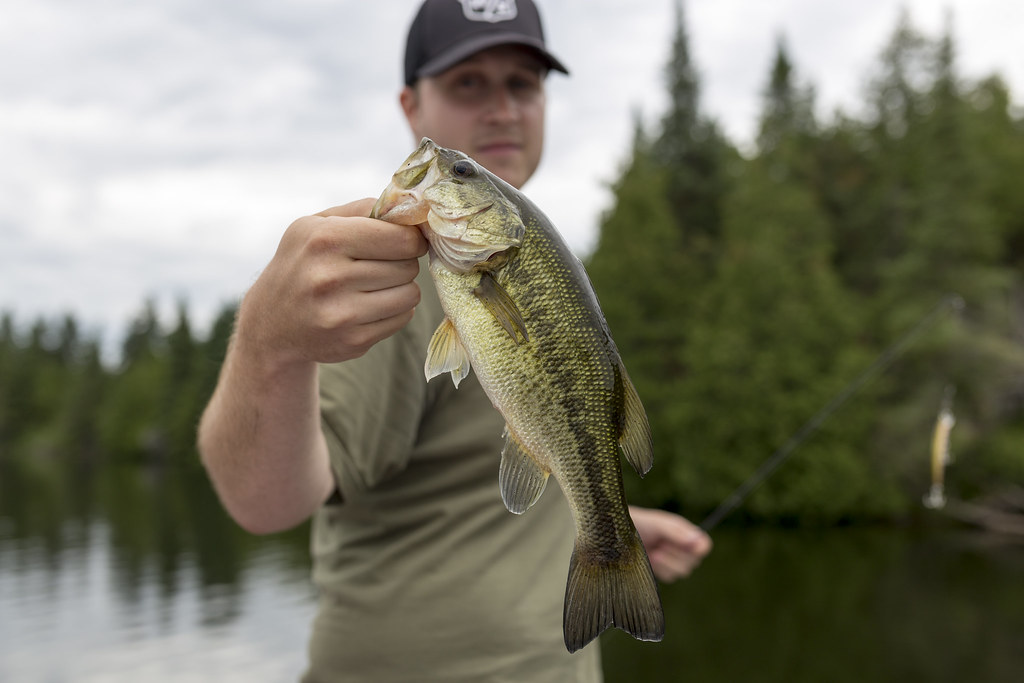
Keep the noise down. Sound carries through water better than through air, and a dropped tackle tray or a hull bang travels a long way under the surface. Move softly, especially when you are working close-in cover in shallow water where fish are easily spooked.
The fundamentals are not hard
None of this is complicated. Find the edges, throw the line and not the lure, match your rod to the fish, fish the structure slowly and quietly, and move when a spot goes cold. A beginner who does those five things will out-fish an experienced angler who is blasting casts into open water. Lake fishing has a reputation for being slow, but most slow days are not the lake's fault. They are casts aimed at the wrong place. Aim at the edges, bring a pair of polarized sunglasses so you can actually see the structure under the surface, and the still water starts giving up fish.
Ready to shop? Compare bass fishing rod across stores →