


Kayak Fishing Tips for Beginners: Safety and Staying Steady

Kayak fishing looks effortless when someone who knows what they are doing is gliding across a calm cove pulling in fish. It is not effortless. It takes time to get good at, the kind of apprenticeship that can run into seasons before you feel like a veteran. But it is also one of the most rewarding ways to fish, quiet and close to the water, reaching spots a boat cannot, and the learning curve is far shorter if you start smart instead of stubborn.
People have fished from kayaks for centuries; it is not some new gimmick. The stable sit-on-top design that dominates today is what made it accessible to the rest of us, and the popularity has exploded because, once it clicks, nothing else gets you so quietly into so many places. Here is how to shorten the climb from nervous beginner to comfortable angler.
Find someone who already does it
The single biggest shortcut in kayak fishing is not gear, it is a mentor. Tagging along with an experienced kayak angler who lets you watch and learn compresses years of trial and error into a handful of trips. They will show you how they balance, how they manage rods and paddle, how they read the water, things that are genuinely hard to figure out alone and obvious once you see them done.
If you do not have an old-timer to learn from, start humble. Pick calm, sheltered water for your first outings and a stable, forgiving boat. A wide sit-on-top fishing kayak is far more stable than a narrow touring kayak, and that stability is exactly what a beginner needs while learning to fish and balance at the same time. Add a comfortable kayak seat early, because long days hunched on a hard deck end fishing trips fast.
Safety first, every single time
Before you push off, run the checks. What is the weather doing, now and over the next few hours? What is the tide doing if you are on coastal water? Are there currents, boat traffic, or hazards you should know about? A kayak is a small boat and it does not forgive being caught out by conditions, so the background check is not optional, it is the price of admission.
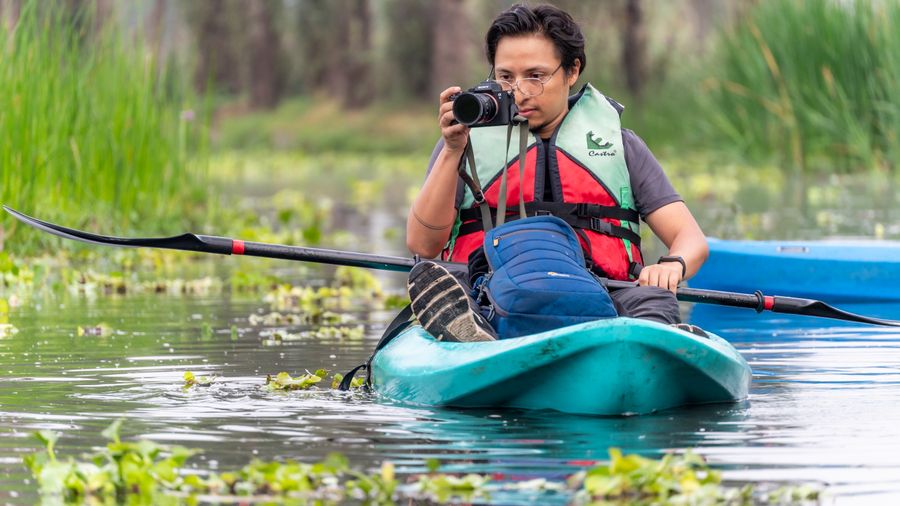
Wear a life jacket, always, no exceptions, no matter how strong a swimmer you are or how calm the water looks. A kayak life vest cut for paddling lets you move your arms freely while you cast, so there is no excuse to leave it off. And carry signaling and communication: a whistle, and a phone or radio in a dry bag so a soaking does not leave you stranded and silent.
Keep the water out and the boat steady
Two habits keep a kayak doing its job. First, keep the hatches closed while you fish. The sealed compartments are what keep a sit-on-top buoyant and dry inside, and an open hatch is an invitation for water to get where it should not be, especially if you take a wave or roll. Latch them before you launch and leave them latched.
Second, when you reach a spot and want to fish it properly, anchor. Trying to fish while constantly correcting your drift is exhausting and it spooks fish. A small kayak anchor on a trolley line holds you steady over the structure you want to fish, so you can put both hands on the rod instead of the paddle. Steadiness is most of what separates productive kayak fishing from flailing.
Rig the boat so you can actually fish
The thing nobody warns beginners about is that you cannot hold a rod, work a lure, and paddle all at once. You only have two hands. The solution is rod holders that park your rods when your hands are busy, so you can paddle to the next spot, fight a fish, or re-rig without putting a rod down on a deck where it will roll off. A good kayak rod holder is not a luxury on a fishing kayak, it is what makes the whole thing work.

Keep the rest of your gear lashed down and reachable. A deck-mounted tackle box or crate holds your terminal tackle within arm's reach, and a kayak paddle leash means a dropped paddle floats beside you instead of drifting away while your hands are full of fish. Everything that can go overboard should be tethered or stowed, because retrieving gear from the water in a tippy boat is exactly the kind of moment that flips beginners.
Tell someone, and build up slowly
Before you head out, tell someone where you are going and when you expect to be back. It costs nothing and it means that if something goes wrong, someone knows to come looking and where. This one habit has saved lives, and skipping it has cost them.
Then build up gradually. Short trips on calm water first, then longer ones, then bigger or rougher water only once your balance and boat-handling are solid. Resist the urge to chase the spots the veterans fish until you have the skills to get back from them. Kayak fishing pays off enormously for the patient, and the anglers who last are the ones who respected the learning curve instead of fighting it. Safety first, steady boat, and time on the water, in that order, and you will get there.
Ready to shop? Compare fishing kayak across stores →