Is Paintball a Real Sport? The Debate From Someone Who's Played Both Sides

Someone asked me once whether paintball was "really a sport" or just "shooting each other with paint guns," and I made the mistake of trying to answer simply. The question is more interesting than it sounds — and the answer depends heavily on which version of paintball you're actually looking at.
The Case for Sport
Watch a competitive paintball match — NXL or PSP-style speedball on an inflatable bunker field — and the sport argument becomes very hard to dismiss. Players move at a sprint, dive, communicate constantly, and make tactical decisions at a pace that rivals any traditional team sport. The physical conditioning required is real: anaerobic bursts, explosive lateral movement, sustained crouching and standing. Nobody sits still.
There are official leagues, national rankings, coaching staffs, and sponsored teams. Competitive players spend serious hours practicing snap-shooting technique, bunker-to-bunker movement, and breakout sequences. They use paintball training equipment like mirrors and dummy bunkers between events. That's not a hobby — that's a training regimen.
The governing bodies, the rulebooks, the referees with flags — it has all the structure of an organized sport. The fact that it's less visible on TV than basketball doesn't change what it actually is when you're standing on that field.
The Case for Hobby (and Why It's Not Wrong)
Here's the honest part: most people who play paintball are not playing competitively. They're at a rental field on a Saturday with colleagues, wearing borrowed gear, getting eliminated in 45 seconds, and having a great time doing it. For them, paintball is clearly recreational — a hobby, an experience, a stag party activity.
The hobbyist frame isn't a criticism. Plenty of activities exist on a spectrum from recreational to serious competitive. Cycling is a hobby for most people and an Olympic sport at another level. The category "sport" doesn't require that every participant be a serious athlete.

What I'd push back on is the dismissal — the idea that because some people play casually, it can't be a sport. That logic doesn't hold when applied to any other activity.
What It Actually Takes Physically
I played a scenario game once — six hours, mixed terrain, several hundred players — and I was wrecked afterward. Not "tired," but actually physically exhausted in the way that comes from sustained effort. Carrying a paintball marker and gear for that duration, running across uneven ground, dropping to prone and back up dozens of times — it accumulates.
The upper body demand is underrated. Holding and controlling a paintball gun at chest height, repeatedly shouldering and aiming it, is not trivial over the course of a day. Add the hand-eye coordination required to hit a moving target at 80 feet and the argument that it's "not athletic" falls apart quickly.
Good paintball jersey and paintball pants are cut for movement because movement is constant. The gear isn't theatrical — it's functional athletic wear.
The Gear Argument Goes Both Ways
Some people point to the equipment cost and say it proves paintball is a hobby — something expensive that enthusiasts pursue for fun. But expensive equipment is present in every elite sport. Cycling, skiing, golf, rowing — none of these are disqualified by their gear costs. The equipment argument is about economics, not about the nature of the activity.
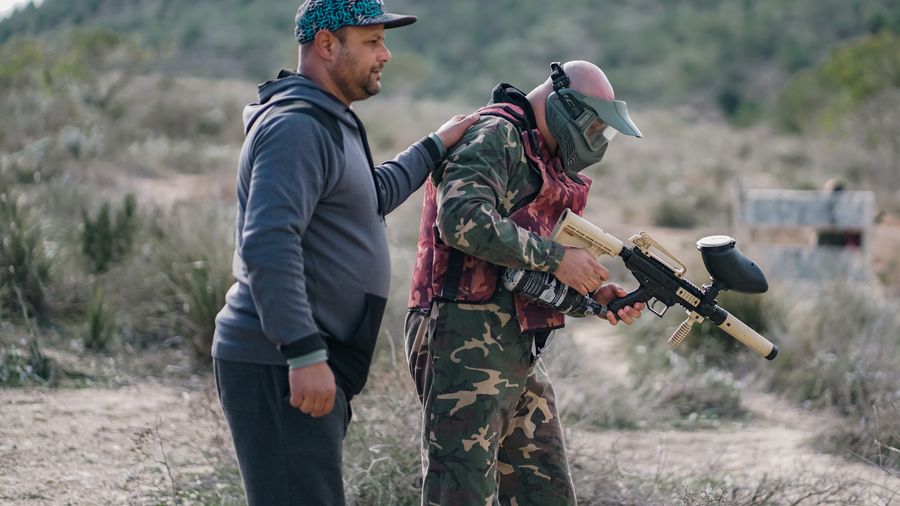
At the same time, high-end gear — a tournament paintball gun versus a rental marker — does create real performance differences, which is one genuine complexity in the sport/hobby divide. It's more gear-dependent than pure running, for instance.
What I'd Skip
The entire argument when you're about to play. It genuinely doesn't matter at the field. You'll move, compete, make tactical choices, and feel the outcome in your legs afterward. Whether the dictionary calls that sport or recreation won't change any of that.
My honest position: paintball is a sport when played competitively and a recreational activity when played casually, and both versions are worth your time. The debate exists because people conflate the tournament version with the birthday-party version and can't agree which one defines the category. They both do.
Ready to shop? Compare Outdoors & Recreation across stores →