
How to Pick Hiking Boots That Actually Fit Your Feet

Almost every "these boots are terrible" review is really a fit problem wearing a one-star disguise. The boot that crippled one hiker carries another up a mountain in comfort. Get the fit right and most decent boots work. Get it wrong and the best boot on earth blisters you.
I've hiked in boots I loved and boots that left me limping back to the car, and the difference was never the logo. It was a thumb's width of toe room and whether my heel stayed put. Here's how to actually buy a pair.
Try them on at the end of the day, with your socks
Feet swell over a day and swell more on a long hike. Boots that fit perfectly at 9 a.m. can feel two sizes small by mile eight. Shop in the late afternoon, and bring the hiking socks you'll actually wear — a thicker merino sock changes the fit more than people expect, so a cotton gym sock at the store tells you nothing useful.
The test that matters: with the boot unlaced, slide your foot forward until your toes just touch the front. You should be able to fit one finger snugly behind your heel. That's your downhill margin — without it, every descent jams your toes into the front and you lose toenails. Then lace up, and your heel should lock in place with almost no lift when you walk. Heel slip is what makes blisters.
Match the boot to the actual hiking you do
Be honest about your trips, not your fantasy trips. If you walk groomed trails and day-hike, a low hiking shoe or light trail running shoe is lighter, cooler, and breaks in faster than a boot — and your feet will thank you. The old rule that everyone needs stiff over-the-ankle boots is mostly leftover marketing.
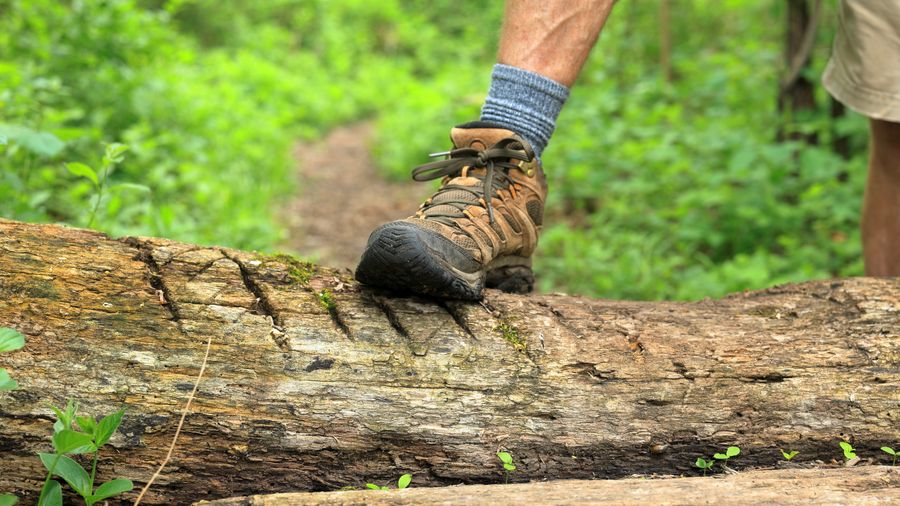
If you carry a heavy pack or walk rocky, ankle-rolling terrain, a midweight hiking boots with real ankle support and a stiffer sole earns its weight. For multi-day trips with a loaded backpacking boots, you want stiffness so sharp rocks don't bruise your soles by day three. The heavier the load and the rougher the ground, the more boot you want — and not a gram more.
Waterproof isn't the free upgrade it looks like
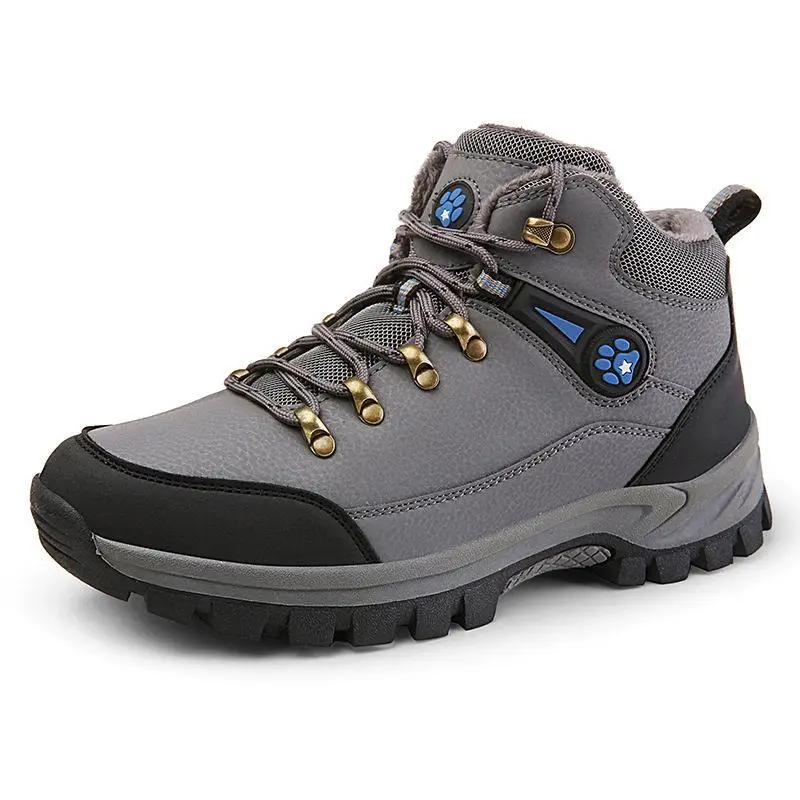
A waterproof membrane sounds strictly better, so people always pay for it. The catch: that same membrane traps heat and sweat, so your feet bake on warm days, and once water gets in over the cuff, a waterproof boot stays wet for days because it can't breathe dry. For hot, dry hiking, non-waterproof boots that drain and breathe are often the smarter pick. Save the waterproof waterproof hiking boots for genuinely wet, cold, snowy country where keeping water out actually pays off. If you do go waterproof, pair them with quality wool socks that keep wicking even when damp.
Break them in before you need them
Never wear new boots on a big hike. Walk them around the house, then on short flat walks, then a longer one, before you trust them on anything serious. Stiffer leather boots need a week or two of this; light synthetic shoes barely need any. While you break them in, you'll learn where the hot spots are — and a little pre-emptive tape or a thin insole upgrade can fix a hot spot before it becomes a wound.
Leather, synthetic, or a mix
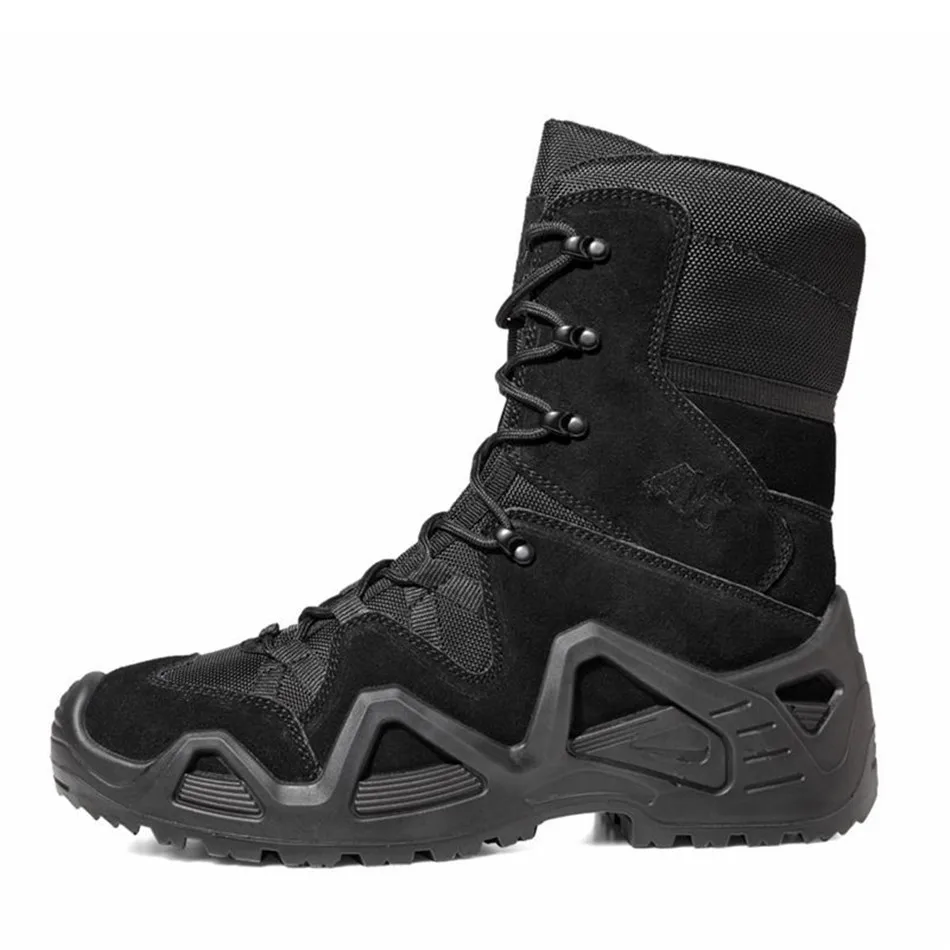
The upper material changes how a boot fits and lasts. Full-grain leather hiking boots are tough, water-resistant, and mold to your foot over time, but they're heavier, hotter, and need the longest break-in — great for rough country and heavy loads, overkill for a flat afternoon trail. Synthetic and mesh boots are lighter, cooler, and ready to hike almost out of the box, at the cost of durability and support. Most modern boots split the difference with a leather-and-fabric mix, which is the right default for the average hiker.
Whatever the upper, the part that wears out first is the tread and the cushioning, not the fabric. Good boot laces are worth keeping a spare set of in your pack, because a snapped lace miles from the car is a genuinely annoying way to limp home. And resoleable boots, while pricier up front, can be rebuilt instead of replaced if you hike enough to wear them down — worth it only if you're out often.
What I'd skip
Skip buying online sight-unseen for your first pair — feet are too personal, and a half-size or a wide-vs-regular last is the whole game. Skip the "do everything" mountaineering boot for casual trails; it's overkill that punishes you on flat ground. Skip cotton socks entirely — they hold water against your skin and blister you faster than anything. And don't trust a star rating: a boot that's perfect for a narrow foot is a torture device on a wide one, and the reviews can't tell you which you have.
The honest answer
Walk into a store late in the day, in your real socks, and try on three or four pairs across brands. Buy the one where your heel locks, your toes have a finger of room, and nothing pinches — regardless of the name on the side. Fit is the entire decision. Everything else is a tiebreaker.
Ready to shop? Compare waterproof hiking boots across stores →