Cooking Fresh Fish: How to Fry, Grill, and Bake It Right

The fish you catch is only as good as the way you cook it, and most people ruin a perfect fillet in the last ten minutes. I've eaten enough overcooked trout in my life to know.
I'm not a chef. I'm an angler who got tired of bringing home beautiful fish and turning it into something rubbery. Over the years I've settled on three methods that almost never fail: frying, grilling, and baking. None of them are complicated. They just reward attention. Here's exactly how I do each one, and where the wheels usually come off.
Frying: hot pan, dry fish, real coating
Pan-frying is the method I reach for most, because it's fast and forgiving as long as you respect the heat. The single biggest mistake I see is starting with a cold pan and a wet fillet. The fish steams, the coating goes soggy, and you spend five minutes fighting skin that's glued to the metal.
I pat the fillets bone-dry with paper towels first. Then I season the flour or cornmeal coating heavily — salt and black pepper at minimum, often a little paprika and garlic powder. The coating should be seasoned more than you think; most of it falls off in the pan. I get the butter or oil genuinely hot, just shy of smoking, before the fish ever touches it. You want that immediate sizzle.
A thin fillet like a panfish or small trout cooks in two or three minutes a side. Don't poke it constantly. Let it form a crust, flip once, and pull it the moment the flesh turns opaque all the way through. A good fillet knife makes the prep work cleaner, and a cast-iron fishing skillet holds heat better than anything else I've used. Butter browns fast, so if I'm cooking a big batch I switch to a neutral oil with a higher smoke point.
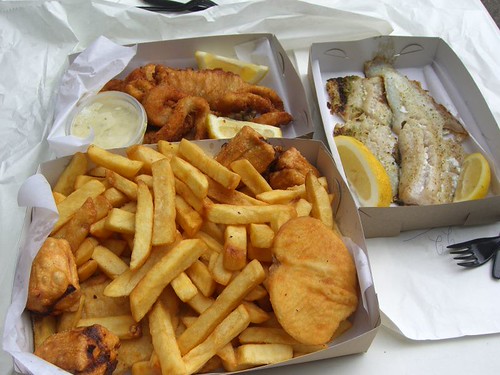
Grilling: oil first, or lose your dinner to the coals
Grilling looks like the easy option and it's actually the trickiest. Fish isn't a burger. It releases its own juices the second it hits heat, and those juices drip straight into the fire, taking your moisture with them. A delicate fillet can also tear apart and fall through the grates if you so much as look at it wrong.
Two things save me every time. First, I coat the fish in oil before it goes on — a thin film seals some of that moisture in and keeps the flesh from welding to the grate. Second, I leave it alone. I get the grates clean and hot, lay the fillets skin-side down, and don't touch them until a peek underneath shows the bottom half has cooked through. Then one careful flip, watch closely, and off.
For anything flaky or thin, I cheat and wrap it in foil with a pat of butter, lemon slices, and whatever herbs I've got. The foil traps the steam and marinates the fish in its own juices, so it basically can't dry out. A long-handled grill spatula and a hinged fish grilling basket are worth every penny if you grill fish more than a couple times a season — the basket lets you flip a whole fillet without it disintegrating.
Baking: the hands-off method that's hard to mess up
When I don't want to babysit a pan or fight a grill, I bake. It's the most relaxed way to cook fish and the most consistent. Marinade goes on, oven preheats, fish goes in, and I can pour a drink while it cooks.
I lay the fillets in a baking dish, brush them with oil or melted butter, and add lemon, herbs, maybe a little white wine in the bottom of the dish to keep things moist. A moderate oven — around 400°F — does the job. The one rule I never break: I check it before I think it's done. Oven temperatures lie, fillet thickness varies, and overcooked baked fish is just as dry as overcooked fried fish, only without the crust to apologize for it.

The one rule under all three: don't overcook
Every method above lives or dies by the same principle. Fish goes from perfect to ruined in about ninety seconds. The flesh should just turn opaque and flake when you nudge it with a fork — that's done. If it's firm and dry, you've gone too far, and there's no coming back.
The old guideline of cooking roughly ten minutes per inch of thickness is a decent starting point, but treat it as a suggestion, not gospel. I'd rather pull a fillet thirty seconds early and let carryover heat finish it than leave it in "just to be safe." A cheap instant-read meat thermometer takes the guesswork out entirely if you're nervous — fish is done around 140°F.
None of this is hard. Keep the fish dry going into the pan, oily going onto the grill, checked early in the oven, and pulled the instant it flakes. Do that and the fish you worked so hard to catch finally tastes like it was worth the trip. Get yourself a decent fishing cooler to bring the catch home in good shape, and the kitchen half takes care of itself. If you're still building out your setup, my notes on fishing gear cover the rest of what earns a spot in the boat.
Ready to shop? Compare fish grilling basket across stores →