The Real Secret to Sticking to a Family Budget Once You Make One

I've made dozens of budgets. The first dozen lasted about two weeks each. I'd sit down, build a beautiful plan, feel virtuous, and then one unplanned trip to the store would knock the whole thing sideways and I'd quietly give up. The secret I eventually learned is almost insulting in how simple it is: making a budget and keeping a budget are completely different skills, and nobody teaches the second one.
What surprised me most is that income has almost nothing to do with it. A family earning thousands a month can have the exact same problem as one earning hundreds, money slips away regardless of how much there is. The difference between families who keep their budget and families who don't isn't the size of the paycheck. It's a handful of small, unglamorous habits.
A budget isn't just balancing, it's making room for savings
For a long time I thought a budget was successful if income equaled expenses, if it balanced. That's a trap. A budget that balances perfectly leaves nothing for the future, and the future always shows up, a busted appliance, a medical bill, a job gap.
A real budget builds in less spending than you're allowed and treats savings as a fixed expense, not the leftovers. After my rent, food, and transportation are accounted for, and assuming taxes are already handled, what's left isn't "fun money," it's earmarked. Some goes to savings before I'm allowed to touch the rest. I write the whole plan out in a budget planner notebook so it's concrete, not a vague intention floating in my head.
Keep a logbook and actually fill it in
The number one reason my early budgets died is that I stopped tracking. I'd make the plan and then never check it against reality. A plan you don't monitor is a wish.

Now I keep a simple logbook, income on one side, expenses on the other, updated weekly. It takes ten minutes. The point isn't precision to the penny, it's staying aware. When I write down a purchase, I notice it in a way I never did swiping a card on autopilot. A small expense tracker ledger on the kitchen counter does more for my finances than any app I've tried, mostly because it's visible and I can't ignore it.
Buy groceries in one planned trip
Scattered shopping is where budgets bleed out. Every extra trip to the store is an opportunity to buy something you didn't plan for. So I consolidated: one big shop for the whole target period, built from a written list of what we actually need.
Buying for the full stretch at once does two things. It cuts the number of trips, and it lets me take advantage of bulk discounts where they're genuinely cheaper by the dozen. I keep the pantry organized in clear airtight food storage containers so I can see what we have and don't double-buy. The list is the whole trick, I do not deviate from it.
Stay out of stores you don't need to be in
This one sounds too obvious to matter, but it's the most effective rule I have. If I don't need to buy something, I don't go to the store. No browsing, no "just looking." Window shopping is how a budget dies, you go in for nothing and come out with a thing you didn't know existed an hour ago.
The same logic applies online, which is harder, the store is always open and always in my pocket. I deleted the apps that tempted me and unsubscribed from the sale emails. You can't impulse-buy from a store you're not standing in. For the things I genuinely do need, I keep a running list in a magnetic shopping list pad on the fridge and buy them on the one planned trip.
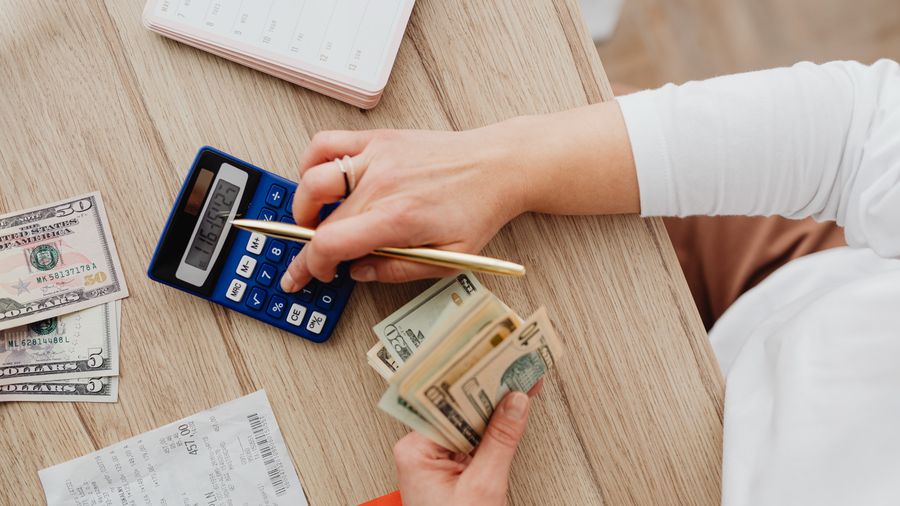
Wait before you buy, and watch the want dissolve
The last habit is a pause. Before I buy anything that isn't on the plan, I make myself wait. Think twice, sometimes sleep on it. An astonishing share of the time, the "need" turns out to be a passing whim that evaporates by the next day. If I still want it after the wait and it fits the plan, fine. The wait isn't about denial, it's about telling the difference between a need and an itch.
Where the savings actually go
What you do with the money you keep matters as much as keeping it. A piggy bank or jar is fine for the first small cushion, and there's something to be said for cash you can see, a cash envelope budgeting system makes the limits physical. But once the savings grow past a starter amount, get it into an actual account earning something, where it's safe from intruders and, honestly, safe from you. The bigger it gets, the more options it buys you, eventually even the help of an adviser for higher-yielding choices.
None of this is sophisticated. That's the point. The families who stay on budget aren't smarter or richer, they just kept the logbook, shopped once, stayed out of stores, and paused before buying. I keep it all running with nothing fancier than a notebook and a wall calendar planner. Boring habits, real results.
Ready to shop? Compare budget planner notebook across stores → 📚 Or browse investing & money courses in Digital Goods →