Diamond Clarity Grades: Which Flaws Actually Matter
The single most expensive misunderstanding I see among diamond shoppers is thinking clarity means how clear or transparent a stone looks. It doesn't. Clarity is a measure of internal and external imperfections — and once you understand the scale, you'll realize you've probably been told to pay for a level of perfection you could never see with your own eyes.
Every natural diamond formed under heat and pressure over a span of time that's hard to comprehend, and that process leaves marks. Internal flaws are called inclusions; surface flaws are called blemishes. Clarity grading is just a graders' shorthand for how many of these marks a stone has, how big they are, and how easy they are to spot under magnification. The key phrase there is "under magnification" — the entire scale is judged at 10x, not at arm's length on a hand in normal light.
The scale, plainly
At the top sit FL and IF: Flawless and Internally Flawless. These are the rarest and most expensive, and frankly they're a collector's flex more than a practical buyer's need. Below them come VVS1 and VVS2 — very, very slightly included — where inclusions are so tiny even a trained grader struggles to find them under the loupe. Then VS1 and VS2, very slightly included, where a grader can find inclusions with some effort but you never will face-up. Next, SI1 and SI2, slightly included, where inclusions are easier for a professional to see and may occasionally be visible to a sharp naked eye. At the bottom, I1, I2, and I3 — included — where flaws are obvious and can affect both looks and durability, with I3 being the lowest of the lot.
The "eye clean" sweet spot
The only distinction that matters to most buyers is whether a diamond is "eye clean" — meaning no inclusion is visible to the naked eye at normal viewing distance. A stone can be eye clean and still carry a modest clarity grade. This is where the smart money lives. A well-chosen SI1, or even an SI2 on the right stone, can look identical to a VVS to anyone who isn't pressing a loupe to it — which is everyone you'll ever meet. Paying the premium to jump from a clean SI1 up to an IF buys you nothing your eye can register. I'd rather put that money into a better cut, which actually changes how the stone sparkles, or into a diamond engagement ring setting that flatters the center stone.
Why you must look at the actual stone
Clarity grades describe the count and severity of inclusions, but not their location — and location is everything. An SI2 with an inclusion tucked under a prong or near the edge can be completely invisible once set, while an SI1 with a dark crystal smack in the center of the table might catch your eye every time. The grade alone won't tell you this. You have to look at the specific stone, ideally through a jewelry loupe, and ask where the inclusions sit. A stone whose flaws hide near the girdle is a bargain; the same grade with a flaw front and center is one to skip. This is why two diamonds with the identical clarity grade can be priced — and look — worlds apart.
When clarity does deserve your attention
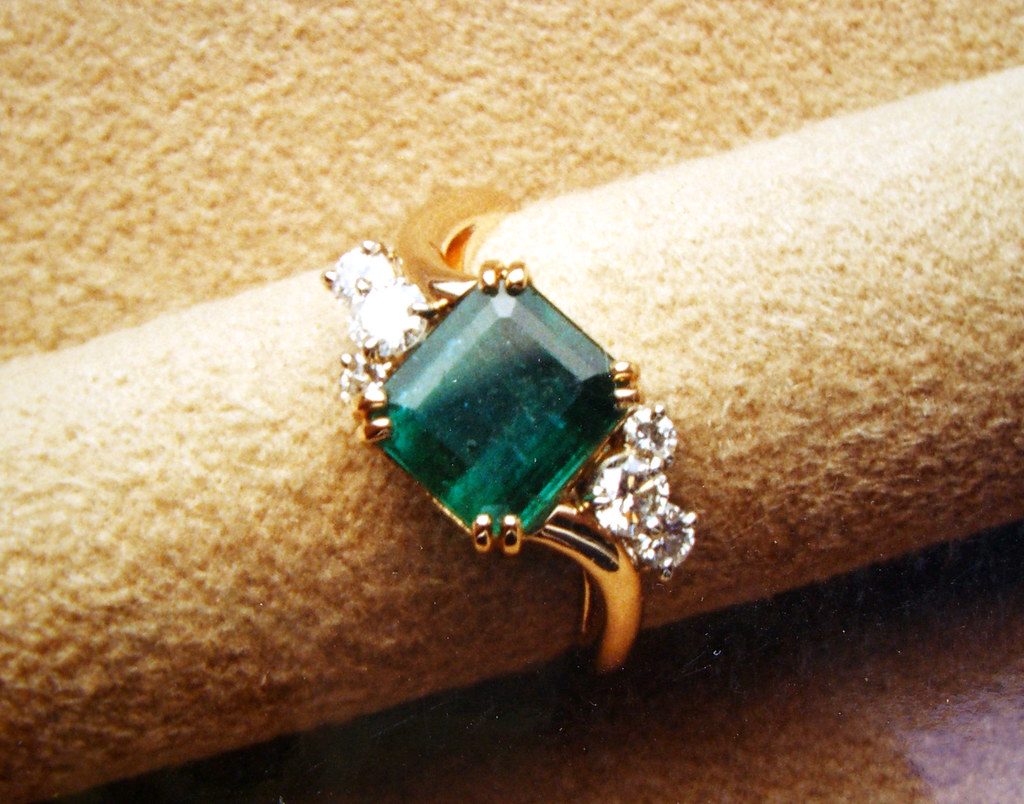
There are cases where I'd stop chasing the bargain. In an emerald cut or an Asscher cut — the "step cut" shapes with long, open facets — there's nowhere for an inclusion to hide. Those big flat planes act like windows, so for an emerald cut diamond ring I'd push clarity up to VS2 or better. The same caution applies to very large stones, where inclusions scale up with the surface area, and to certain I-grade stones where a feathery inclusion reaches the surface and could become a durability problem under everyday wear. For a hardworking piece like a diamond wedding band or diamond tennis bracelet that takes daily knocks, I'd avoid the bottom of the scale on principle.

How I'd shop it
My approach is simple: decide what shape you want, then hunt within the eye-clean range — usually VS2 to SI1 for brilliant-cut shapes — and inspect the actual stone rather than trusting the letter grade. I'd ask the seller to point out every inclusion under magnification and tell me where each one sits. I'd never pay for flawless on a stone destined for a ring or a diamond stud earrings set, because nobody is examining your earrings at 10x. And whether it's a diamond solitaire ring or a sparkling diamond pendant necklace, I'd remember that clarity is the one of the four Cs where the marketing pressure to overpay is strongest and the visible payoff is smallest. Buy eye clean, look at the stone, and keep your money for the cut.
Ready to shop? Compare emerald cut diamond ring across stores →