

Diamond Brands: Why They Mean Almost Nothing

A jeweler once tried to charge me extra for a diamond because of its "brand." I almost laughed. A diamond is one of the few products on earth that can't truly be branded — it's elemental carbon, no different in kind from any other diamond of the same specs. When someone leans on a brand name to justify a higher price, it's worth understanding exactly what you're being sold, because most of the time the answer is "nothing extra."
Think about it the way you'd think about gold. There's no "brand" of gold — gold is gold, graded by purity, not by a logo. Diamonds work the same way. Yes, every diamond is unique in its cut, grade, color, and value, but those qualities are measured objectively on grading reports. None of them constitute a brand in the way a handbag or a watch has a brand. The substance itself is unbrandable.
What a "brand" usually really means
So when you hear a diamond described as a brand, what's actually being referenced? Usually ownership. If a particular company owns a stone at a given moment, it might be called by that company's name — but it's still just a diamond, and the moment it changes hands the "brand" changes with it. Occasionally a stone is associated with a famous cutter, but even that's the exception rather than the rule, and it's still fundamentally a label attached to who handled or owned it, not an intrinsic property of the carbon. Strip away the marketing and a brand-name diamond is a diamond with a story attached to its current or former owner. For the buyer of a diamond engagement ring, that story should change the price by exactly zero.

The branded-cut wrinkle
There's one place the branding conversation gets slightly more legitimate, and it's worth naming honestly. Some companies market proprietary cuts — specific, trademarked facet patterns or arrangements they've developed and named. These are real in the sense that the cutting recipe is distinctive and sometimes genuinely beautiful. But you're paying for the craftsmanship and the design of that particular cut, not for any magic in the stone itself. A trademarked cut can be lovely and worth a premium if you love how it performs — but evaluate it on how it actually sparkles in your hand, through a jewelry loupe and in varied light, not on the strength of the name. The brand should never be the reason you buy; the performance should be.
The trick to watch for
Here's where it turns into a problem. Some jewelers use brand names as a lever to extract a premium from buyers who don't know diamonds well. The pitch sounds authoritative — "this is a so-and-so diamond" — and it's designed to make you feel that you're getting something special that justifies the markup. You usually aren't. If a seller can't point to a measurable difference on the grading report that explains the higher price — better cut grade, higher clarity, larger carat, more desirable color — then the brand is doing the work of separating you from your money. The honest test is simple: cover up the name and compare the stone's actual specs and look against a similarly graded unbranded stone. If they're equivalent, so should be the price.
How to shop without the brand bias
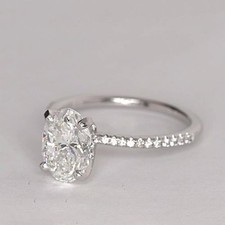
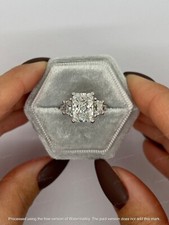
My advice is to shop the four Cs and the grading report, full stop. Decide on the cut quality, color, clarity, and carat that fit your eye and your budget, then compare stones that match those criteria across sellers — ignoring the names entirely. Buy from a seller you trust, with an independent report in hand, and let the stone's measurable qualities set its value. This holds whether you're choosing a diamond solitaire ring, a diamond tennis bracelet, a diamond stud earrings set, or a diamond pendant necklace. A lab grown diamond ring makes the point even more starkly — identical physical properties, no mine, no brand mystique, far lower price.

The bottom line
Don't let a jeweler talk you into an inflated price because a stone carries a particular name. Diamonds aren't really branded — unless you count nature as the only brand that ever stamped them. Pay for cut, color, clarity, and carat, which you can verify and which actually determine beauty and value. Pay for craftsmanship if a specific cut genuinely wins you over on its merits. But never pay a premium for a label alone. A well-chosen unbranded stone in a diamond wedding band or a diamond halo ring will look every bit as brilliant on the hand as one with a famous name on the tag — and you'll have kept the difference for yourself.
Ready to shop? Compare lab grown diamond ring across stores →