The one chef's knife to buy first (and why I stopped overthinking it)
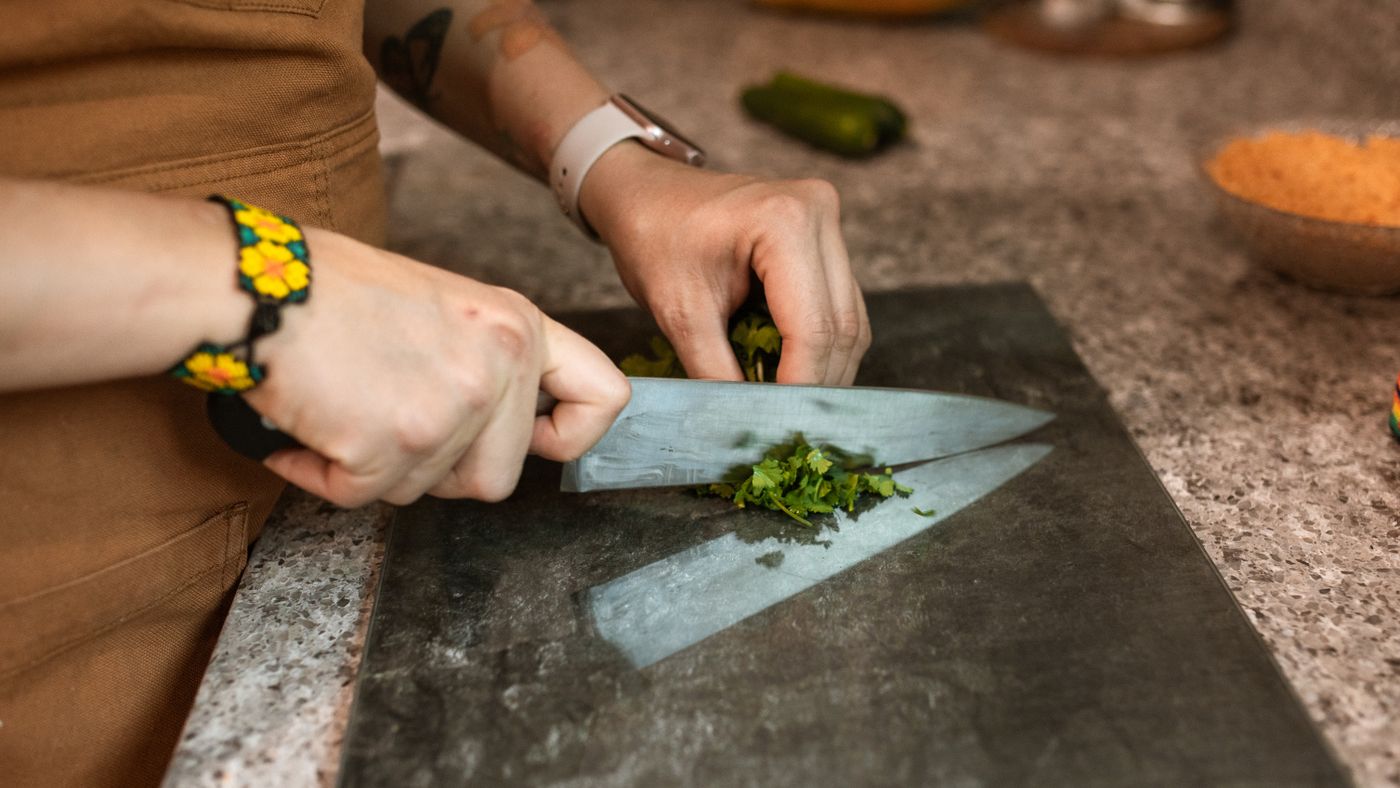
I have probably owned twelve chef's knives. Most were a waste of money. If you let me restart with one, I'd buy the same $45 knife I keep recommending and put the savings toward keeping it sharp — because a sharp cheap knife embarrasses a dull expensive one every single time.
This isn't a roundup. It's me telling you the one knife to buy first so you can stop reading and start cooking. The agonizing — German versus Japanese, 8-inch versus 9, bolster or no bolster — is mostly a way to avoid the unglamorous truth that the knife matters less than whether it has an edge on it.
Just buy the Victorinox Fibrox 8-inch
If you want the answer and nothing else: the Victorinox Fibrox 8-inch is the chef knife to buy first. It's roughly $45, it's lighter than it looks, it comes sharp, and the soft-ish German steel takes a new edge easily when it dulls. Test kitchens have landed on it for two decades not out of laziness but because nothing in its price range beats it, and plenty of $150 knives don't either.
The grippy Fibrox handle isn't pretty — it looks like a tool, not an heirloom — but it stays planted when your hands are wet and greasy, which is exactly when a slick wooden handle becomes a liability. I've handed this knife to nervous beginners and to line cooks, and both got along with it. That's rare. Buy it, use it for a year, and you'll have earned the right to want something fancier.
If your hands are small or a full chef's knife feels like too much blade, the 7-inch santoku knife version is the move instead. Same steel, same value, shorter and lighter. There's no honor in wrestling a blade that intimidates you.

Why I stopped chasing $200 steel
For a while I believed the upgrade story: harder steel, thinner edge, a Japanese gyuto that glides through a tomato like it owes you money. And those knives are real and genuinely lovely. But here's what nobody selling them tells you — they hold a sharper edge longer, then demand a whetstone and the patience to learn it, and they chip if you hack at a squash or hit a bone. The performance is conditional on you becoming a more careful, more skilled knife owner.
Most people don't, and that's fine. I bought a beautiful Japanese chef knife that lived in a drawer because I was scared to dull it. Meanwhile the $45 Victorinox got used every day precisely because I didn't care if it took a scratch. The expensive knife wasn't a better knife for me; it was a worse one, because the best knife is the one you actually pick up. Get the cheap one dirty for a year first.
The two cheap things that matter more than the knife
A knife goes dull, and a dull knife is dangerous — it slips instead of bites, and that's how you cut yourself. So before you've owned the Fibrox a week, get a honing steel and run the blade down it a few strokes before each session. That doesn't sharpen; it realigns the edge so it cuts true between actual sharpenings. It takes ten seconds and most people skip it, which is why most home knives are sad.
The other thing is your surface. Glass cutting boards, stone counters, and ceramic plates destroy edges — every cut on glass is a tiny act of vandalism against your knife. Cut on a wood or soft-plastic cutting board and your edge lasts three or four times as long. When the honing steel stops bringing the edge back, a basic knife sharpener with angle guides or a trip to a sharpening service resets it. That's the whole maintenance story.
What to skip — and what comes second
Skip the block set. The 15-piece knife block is a furniture purchase disguised as a kitchen one — you're paying for eleven knives you'll never touch so the marketing can advertise "complete." Skip the steak-knife filler, skip the cleaver you imagine using, skip the cheese knife. Skip electric sharpeners that grind your edge to a nub. And skip any knife you can only buy online and have never held, unless the return policy is generous — fit is personal, and a full tang chef knife that fights your grip is money set on fire.
What does come second, after a year? A small paring knife for the close work the chef's knife is too big for — hulling strawberries, deveining shrimp, peeling apples in your hand. It's a $10–15 buy and it earns its drawer space immediately. After that, a serrated bread knife so you stop crushing tomatoes and tearing crusty loaves. That's a real three-knife kitchen, and it'll cover ninety-five percent of what you do for years.
Store all three on a magnetic knife strip or in a block, never loose in a drawer where the edges bang into forks and into your fingers when you reach in. Hand wash, dry immediately, and never let any of them ride the dishwasher — the heat and the jostling wreck both edge and handle.
So: Victorinox Fibrox 8-inch, a honing steel, a wood board. Roughly seventy dollars all in, and it outcooks the $300 knife your friend is afraid to use. Get it dirty, keep it sharp, and let the year teach you what your second knife should be. The overthinking was never the path to a sharper knife — using one was.
Ready to shop? Compare full tang chef knife across stores → 📚 Or browse cooking courses & recipe books in Digital Goods →